Free Vocal Sheet Music for Beginning Voice

Free vocal sheet music, because it's almost sure to happen -- if you teach piano, guitar, or sing yourself, eventually someone will ask if you will teach their child voice.
If you ever relent and take on a student, people will never stop asking!
And then you are going to need some music.
WELCOME.
You'll find plenty of songs on this site to keep your singers busy!
Most of these songs, below, feature piano accompaniments of varying levels.
Scroll down the page and you'll find vocal pieces arranged by these categories:
Solos
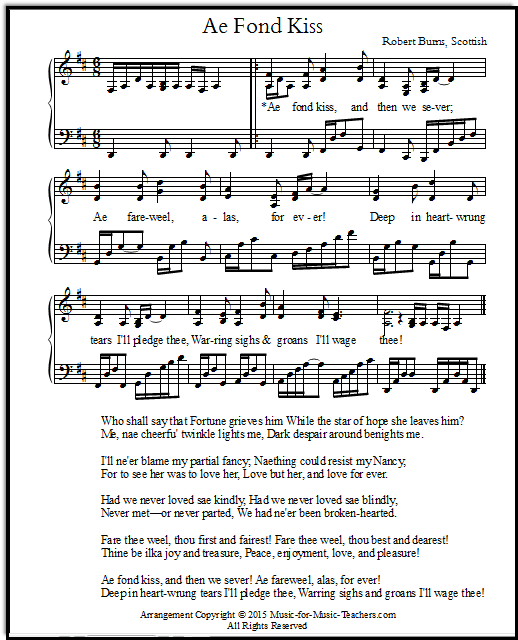
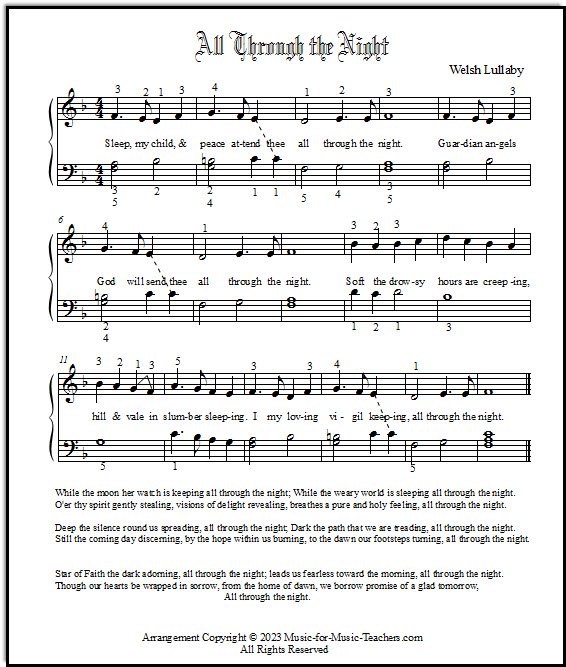
This pretty lullaby has a range of just one octave. If the key of F is not your preferred choice, check out the lead sheets in C, D, Eb, F, and G.
Guitar tabs in D, as well!
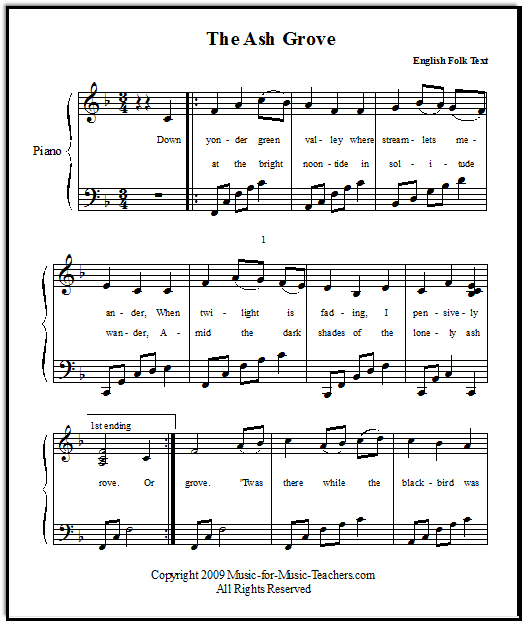
Yes, people will want voice lessons for their children. And that's a good thing...unless you feel unprepared.
But in a small town where one, two, or three piano teachers may be the only live culture going, it is worth it to go out on a limb!
You can learn to teach beginning voice
Yes, you CAN learn how to teach beginning voice (while you improve your own technique, of course).
Certainly, you'll need vocal books and the audio examples which can, fortunately, be found on YouTube these days, but you can get started without them if you have free vocal sheet music.
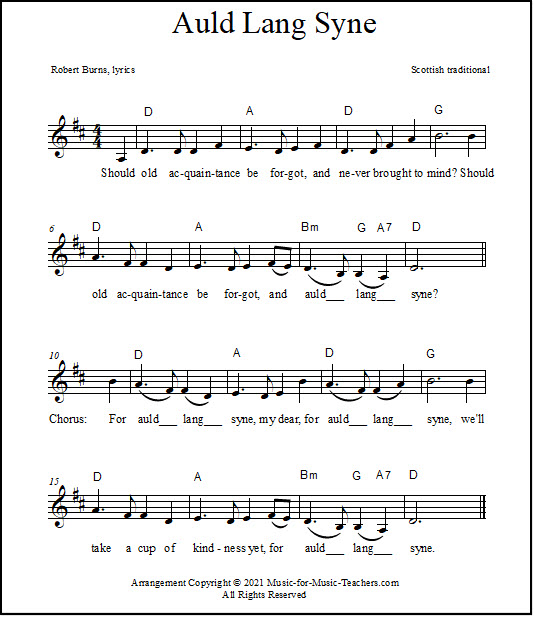
This wonderfully nostalgic song is traditionally sung on New Year's Eve.
Find it on this page in multiple keys.
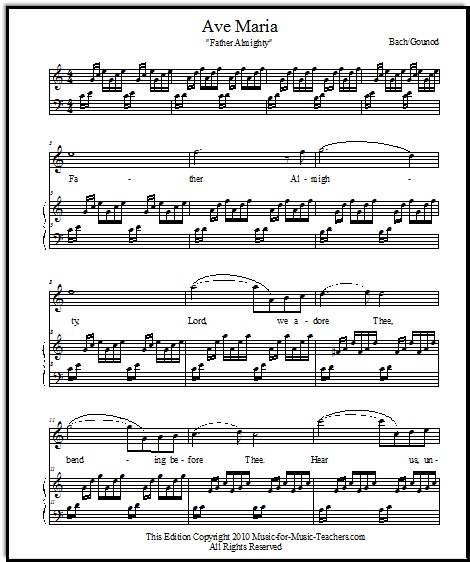
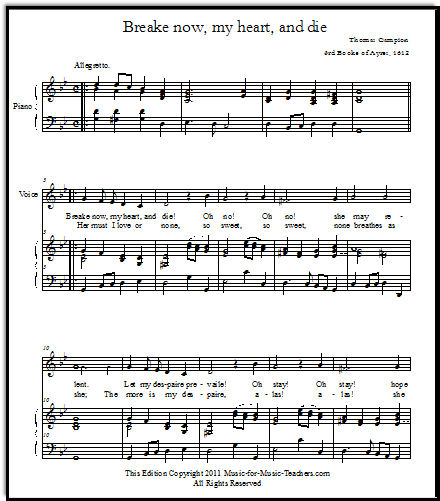
A dramatic song from the English Renaissance with clever, literary references.
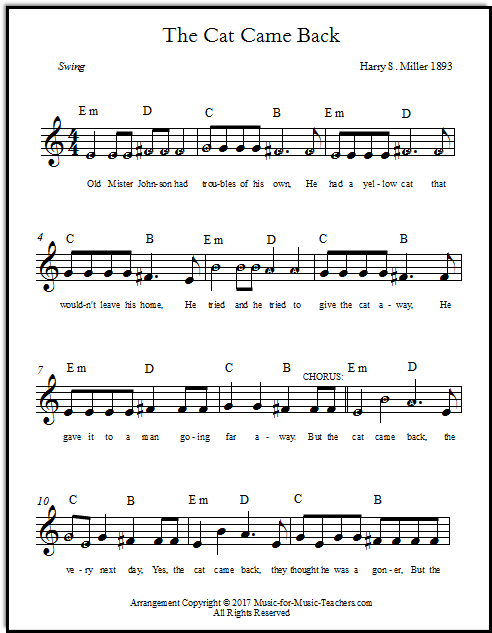
Cat Came Back (for early singers)
This EASY-to-sing melody has silly words that are fun, and repeating notes that are predictable, making it easy to learn even for young students who have trouble matching pitch.
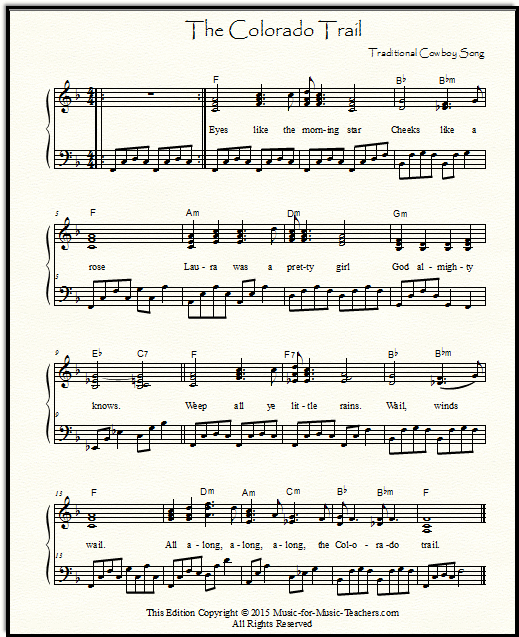
A genuine American cowboy song, with a surprisingly pretty tune.
A vocal duet is also included on this page!
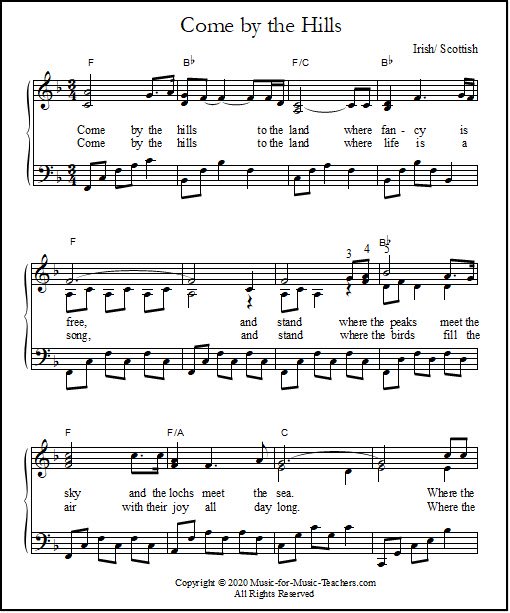
A Gaelic song with English lyrics added to it...
This is very pretty, and easy to sing!
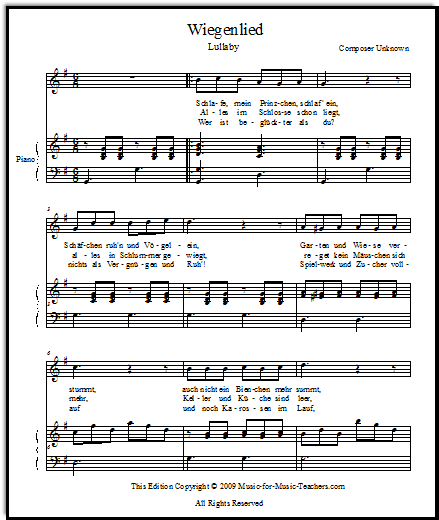
Cradle Song (Schlafe, Mein Prinzchen - known as "Wiegenlied")
Once thought to be composed by Mozart, this sweet lullaby sounds elegant when nicely sung.
I first heard this lovely song in the movie "Emma," sung beautifully in German by Jane Fairfax.
If you have sung in a good choir, taken vocal lessons yourself, continue to listen to good singing, and have the discipline to keep improving your own voice, then teaching voice is something you can do!
Voice lessons can be a bit intimidating
For a young beginner, voice lessons are exciting, and also perhaps a little scary. Even for an older beginner, voice lessons mean putting the ego on the line.
There may be a lot of just-above-a-whisper singing at first... the very opposite of the heartiness that a singer needs to throw into their part.
In fact, even older beginners such as adults can be VERY shy. Their lips may tremble and their hearts pound when they first start singing with you.
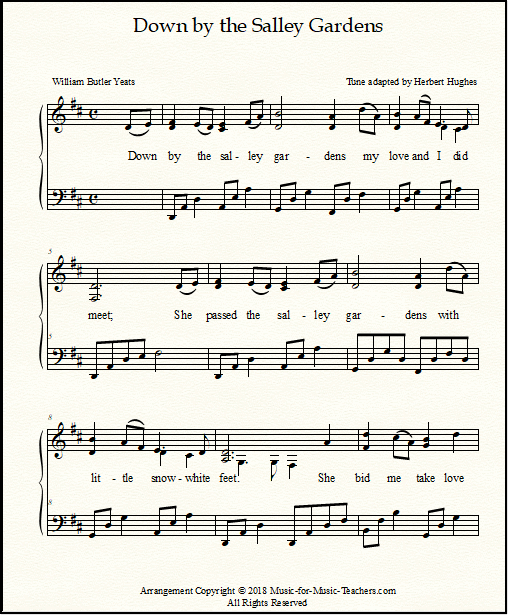
A pretty and well-known old English song with words by William Butler Yeats. Of course, it's about love.
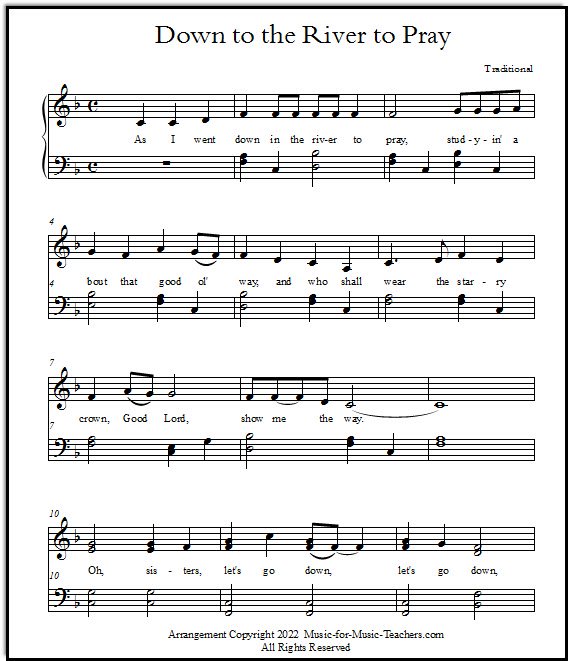
Down to the River to Pray sheet music
This delightful spiritual is available here free in two keys - the key of F (shown) & the key of G
Lead sheets as well!
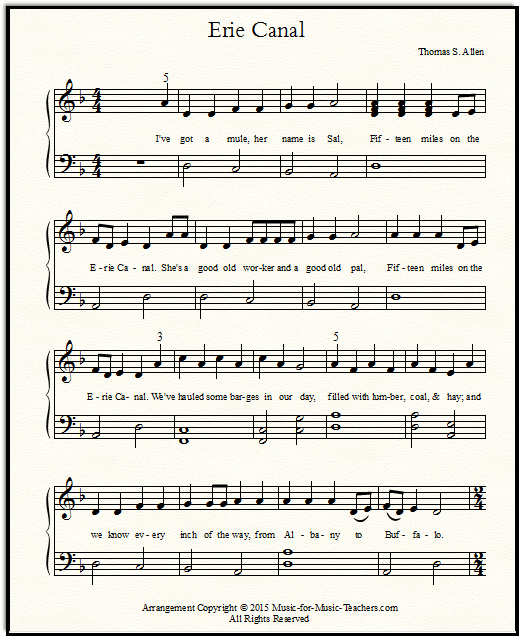
A fun minor melody with lots of repetition (good for beginning voice students) and lyrics that speak of an older time when mules pulled heavy loads on barges along waterways... a favorite with kids who know it!
Boys will happily sing this song!
But that's okay -- they signed up for voice lessons for a reason. They love music, and they want to know how to make music more effectively.
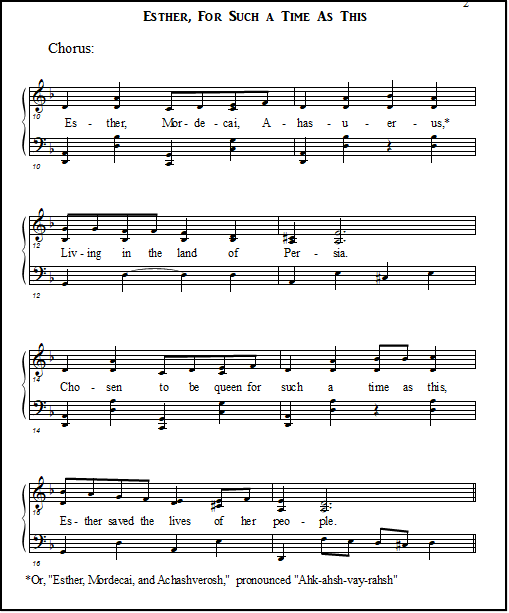
Esther, For Such a Time As This - the story of Queen Esther in the Bible
This 57-page song book includes the repeating chorus shown here, plus 38 verses in which the complete story of Queen Esther in the Bible is told.
It is a dramatic and riveting story, with the planned genocide of the Jewish people over 2,000 years ago!
This piece would work for youth theatre, Sunday school classes, a church program, a Purim performance, or a sing-along. LISTEN TO A VIDEO and see the music.
Sing along with them, a lot
To put them at their ease, I do a lot of singing along WITH them during their lessons (when they are first starting out), especially during vocalises. (And that gives me an opportunity to exercise my voice, too.)
The louder I sing, the louder they will sing. I let them know that I think they are very brave to sing in front of me, or anyone, and I tell them that not many people have that kind of courage!
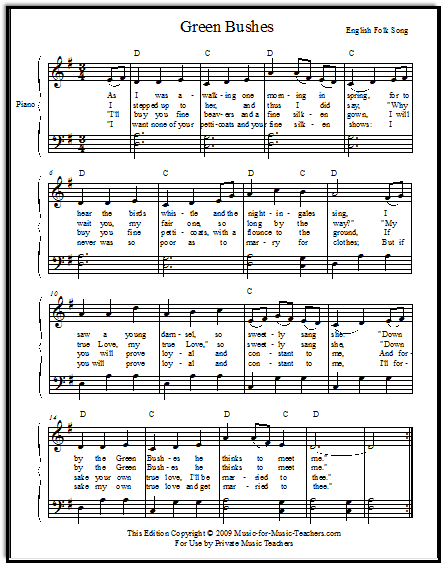
A light, pretty, fast-moving English song (that SOUNDS English!) that will help your young singers understand breathing for singing.
A nice feature of this song is how EASY the piano accompaniment is!
When I hear off-key notes or other funny sounds the first lesson, I never, ever pounce,or even act like something is wrong. They need to get to know me and trust me, and to trust that I believe they have the ability to sing.
Very gentle correction... and slowly
People can develop a lot of funny habits when they sing, and they rarely hear themselves.
Sometimes the habits are visual -- they pull their mouth sideways a little (very common) or raise their eyebrows with tension. Little by little -- not all at once -- you can point out corrections they need to make.
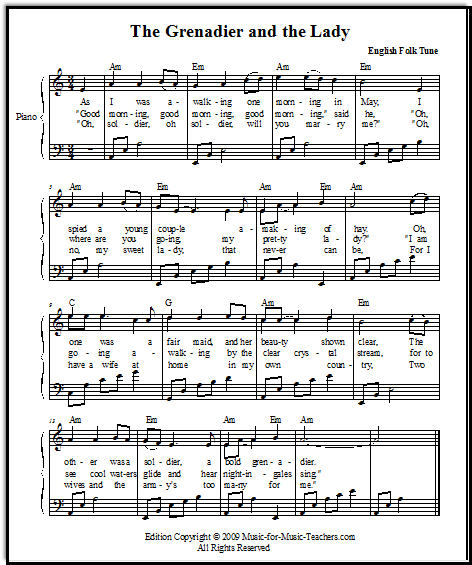
Perhaps my favorite sad song... a story of a British Redcoat and the young woman he cannot marry.
There are many singing lessons to be learned with this lovely melody.
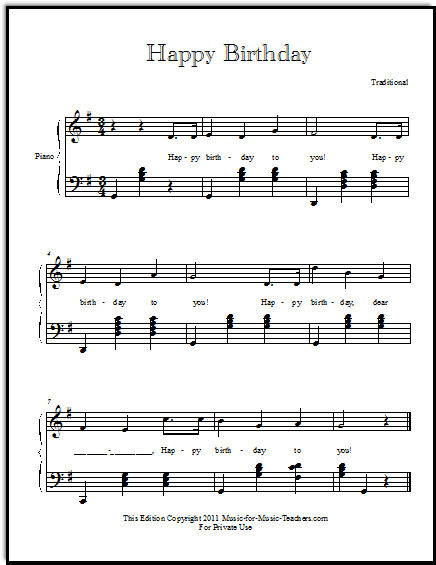
The famous song that everyone knows. Once, it was known as "Good Morning to You!"
Check out the new "singer-friendly " accompaniments.
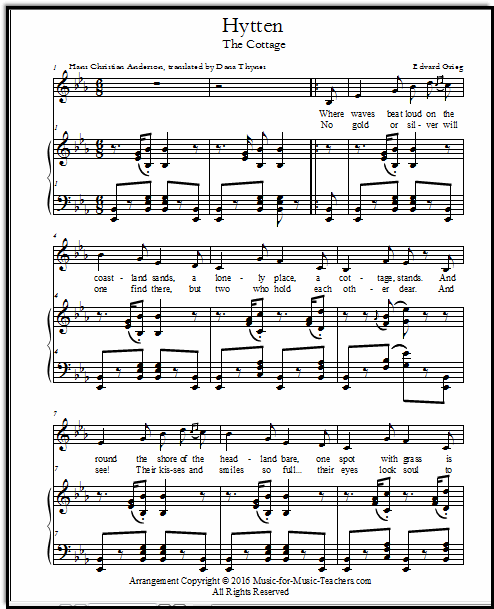
Hytten (The Hut) by Edvard Grieg
Like so much of this Norwegian composer's music, this is a happy-sounding song!
It speaks of being content to dwell by the sea with one's beloved.
Pretty intervals that make one say, "That sounds like Grieg!"
It's best to think in a holistic manner about singing; instead of trying to fix every little thing you notice, try to promote healthy and good habits.
Soon they will start to hear themselves
When they learn what to listen for,they will start correcting themselves more and more.
And they will start to notice the technique of other singers, too. "Wow, you could sure hear her take a breath," or, "She really drops her jaw when she goes up high."
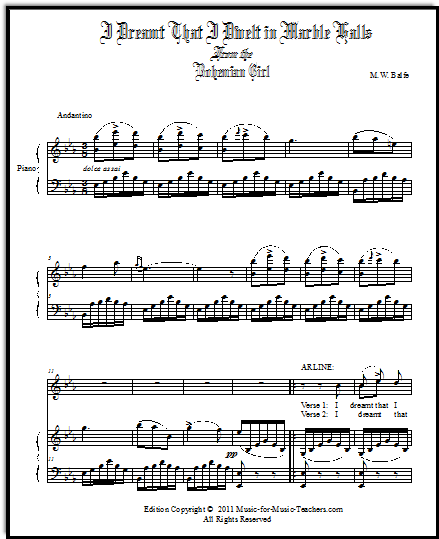
I Dreamt That I Dwelt in Marble Halls, from "The Bohemian Girl"
Sung by a young "princess" kidnapped and brought up among the gypsies, this song is very pretty!
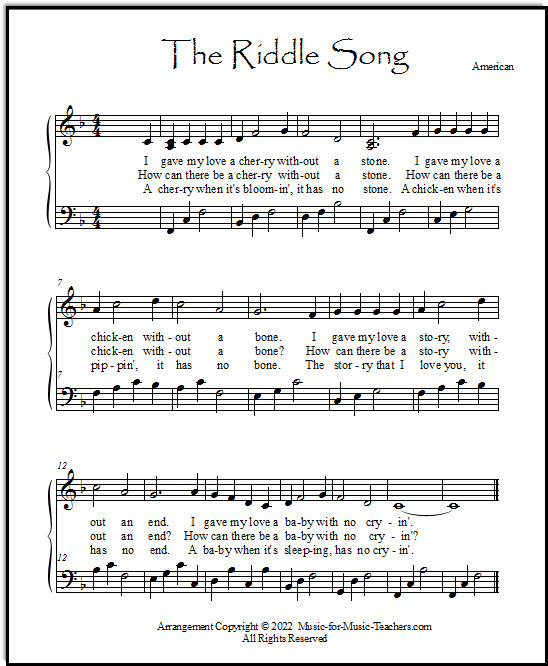
I Gave My Love a Cherry - The Riddle Song
What a pretty song! And with words that lead the singer and listener along to a satisfying conclusion.
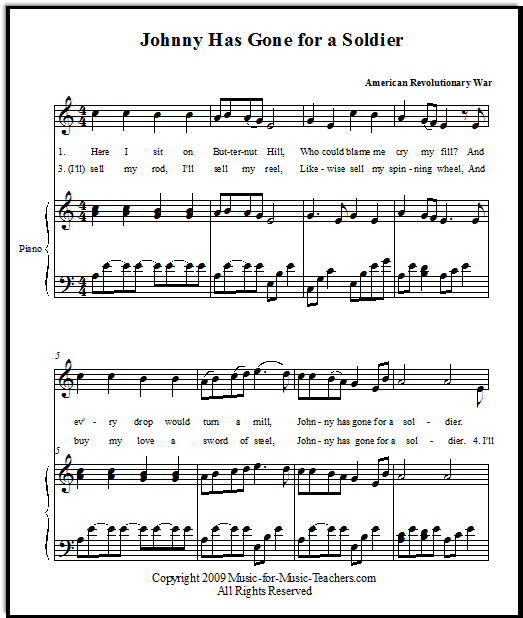
A plaintive, lovely song about missing the lover who has gone off to war, and determining to follow and find him.
MUCH opportunity for working on expression.
Primarily, as a vocal teacher, you want to be like a doctor: "First, do no harm!"
No yelling
Don't let your students shout like Annie singing "Tomorrow." If you don't understand "belting," stay away from it.
Don't force young voices to sing loudly -- volume will come by-and-by, with confidence and an understanding of focus.
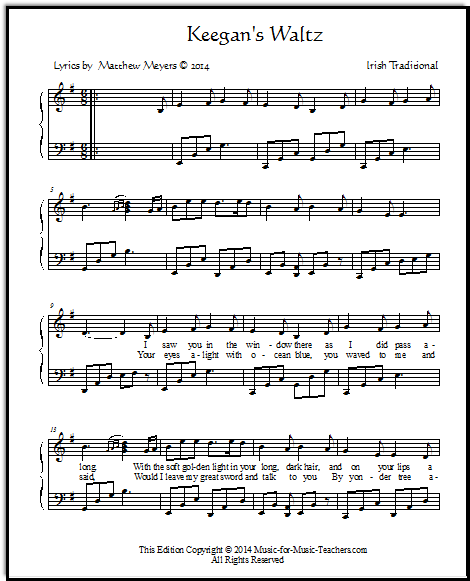
Keegan's Waltz, an Irish song with added lyrics about love
These courtly lyrics were written a few years ago to go with this Irish melody by a young man who is a VISITOR to this site.
The melody is so lovely that it cried out for lyrics!
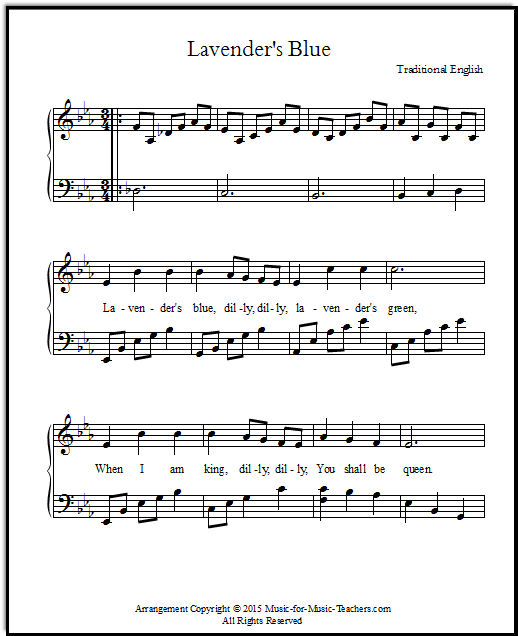
Used as a pivotal moment in the most recent Cinderella movie (with Lily James), this sweet song with the "Cinderella song lyrics" has only 6 pitches, making it perfect for a beginning singer.
With a lovely accompaniment especially for singers.
If they don't already have a natural-sounding vibrato in their voice, don't worry about encouraging vibrato until they have good habits in hand.
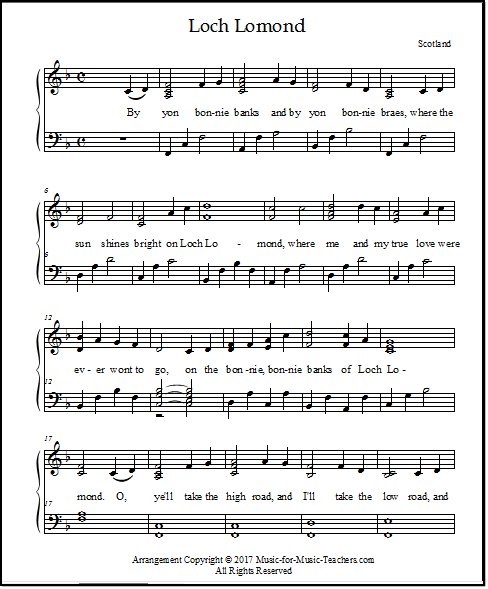
This may bring a tear to your eye.
I've included the original words about the beloved one returning from battle - but by the wrong road.
Several keys are available here.
Such a beautiful old song... and sad.
Good habits?
What do I mean, good habits? Instead of bad habits?
Well, take the case of Miss Prima Donna.

Occasionally you will start a singer who has been imitating pop stars all her young life.
For years, perhaps, people have been fawning over her, saying nice things about her voice.
She has really come for lessons not to learn vocal basics, but for the opportunity to show off her style at recitals and other venues.
Is this student teachable?
She sees you not really as her teacher, but as her booking agent. And she may have real talent, and a very appealing voice!
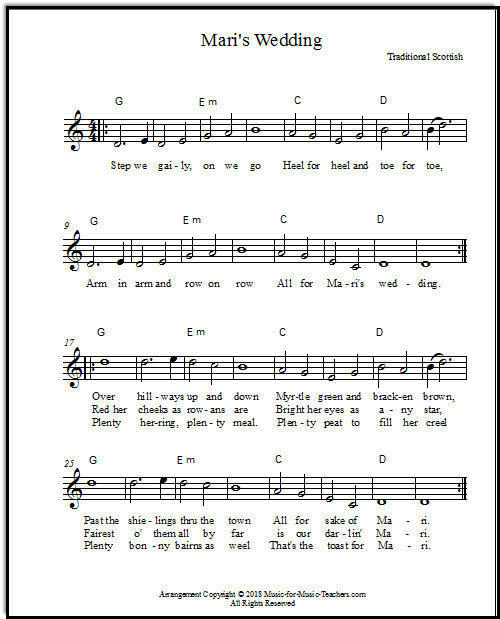
A brisk, energetic Scottish tune with cute lyrics about preparing for a wedding.
Lots of fun, and helpfully for young singers, there is much repetition.
No piano accompaniment for this song yet, but if someone begs me, it could happen sooner.
But this girl may have cultivated an uncontrolled vibrato that will keep her from blending well in choral groups.
She probably scoops and dips with her voice, and is apparently unable to meet a note head-on without sliding up to it. She may want to wiggle her body instead of standing in a relaxed but poised posture.
Yes! I have seen it! And heard it. You have too.
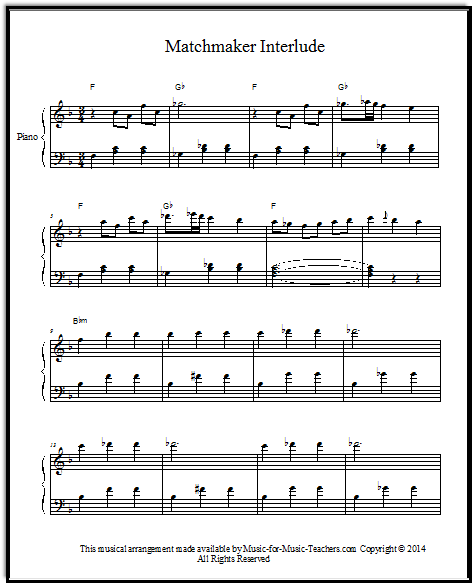
Matchmaker, Matchmaker from Fiddler on the Roof, piano interlude
This free piano music helps fill the gap between the beginning and the end of Matchmaker, and gives an opportunity for some theatrics!
It is your job to break her of all those bad habits and teach her simple, basic classical style. That will almost certainly sound like NO FUN to this girl.
Soon enough, there will be time for pop music
Assure her that she can always pick up those different styles of singing, whether gospel, rock, or country, later!
First she needs to learn to really hear herself and know what a straight style is.
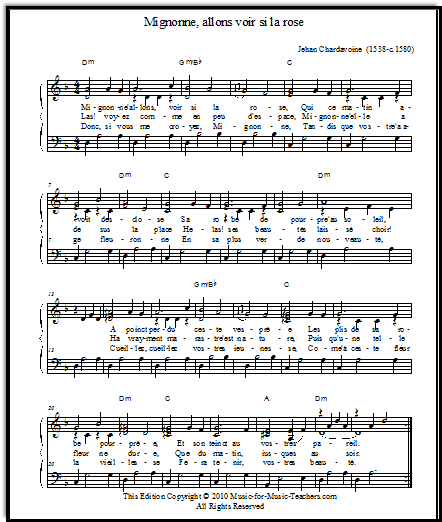
A French song about the briefness of life and love - very understated, slow and elegant, with some passion as well.
A guitar accompaniment would make a performance riveting.
She needs to learn
- how to breathe,
- how to phrase,
- how to articulate words so people can understand her,
- how to keep energy in her vocal lines...
The basics are the foundation
She, along with all students, needs to learn these basics of Singing 101.
She WON'T get these basics by singing along with her iPod or iPhone or whatever device is the latest toy (kids' and even adults' preferred warm-up and practice approach).
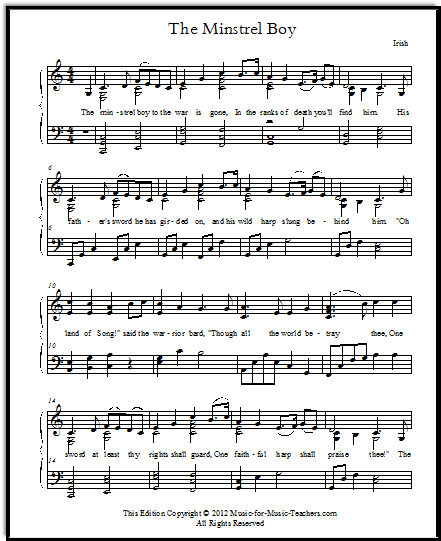
An Irish song about love for one's country, going to battle with a harp and sword.
This old song has a gorgeous melody.
Several keys.
I make it my mission to find for students music they will love, but I make the exception when they ask for rock music.
"Very hard," I tell both voice and piano students.
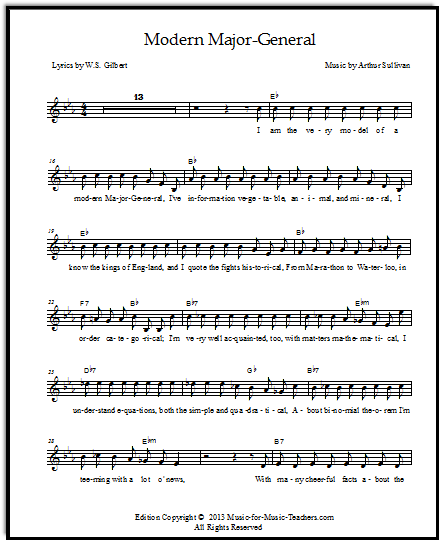
Modern Major-General, from "The Pirates of Penzance"
Brisk & amusing, this comical tune from Gilbert & Sullivan tests one's ability to articulate words very quickly.
Boys will like this.
A challenge!
What I really mean is, "A waste of time for both of us, right now, at this stage in your singing/playing."
Imitation is the best teacher... so beware
Not that they can't learn plenty by imitation -- they certainly can and should -- but that is not why they should be at your music studio. And I don't WANT them imitating rock singers, at least not in every song!
I tell them that we will be looking at that style of music BY AND BY.
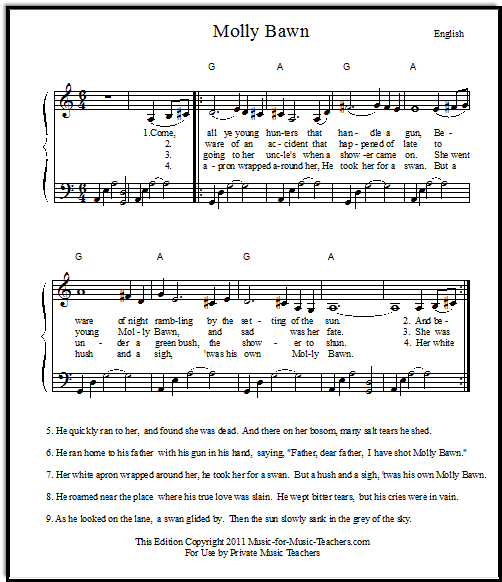
This is a sad story about a young girl shot accidentally by her own sweetheart, a hunter.
The range is just over an octave, and the tune is irresistible.
Because it is a folk tune, every verse the fitting of the lyric's syllables are a bit different. Good practice!
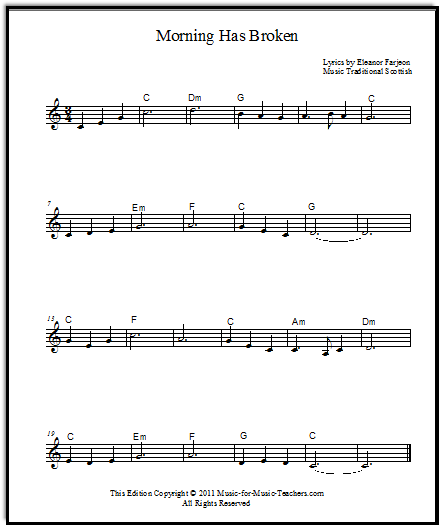
A beautiful old melody made famous by Cat Stevens.
JUST the melody and the chords - I have not written out a piano arrangement for this song yet.
Sorry, no lyrics are given, as they are still under copyright, but you will be able to find them on the internet.
Many of my voice students began music instruction with private piano lessons, or with a band instrument at school. What a huge advantage for them -- note-reading ability is of great benefit to singers.
"Well, that's obvious," I can hear you saying. "OF COURSE any musician should be a notereader!"
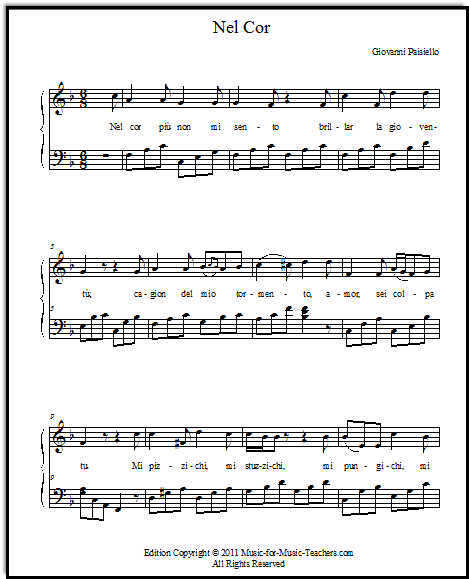
A frequent choice of college music teachers for their newer students, this pretty, short classical piece will involve lessons in breathing, Italian pronunciation, and crescendo.
With several different accompaniments, and variations on the melody.
But all musicians are NOT notereaders. And some of them don't care!
They will happily plug themselves into their iPod or phone, or sit at music lessons and listen to you, the teacher, repeat a song section over and over again until they "get" it.
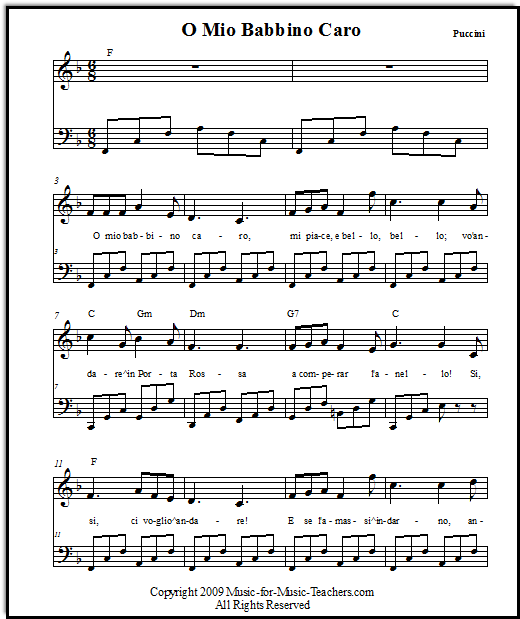
O Mio Babbino, from the opera "Gianni Schicchi"
A very short aria, this soaring melody is so beautiful that it is frequently attempted by 9-year-olds (whom you will find on YouTube)!
Please don't let that happen at your studio, unless you use one of my simplified, lowered arrangements!
Pictured here is page one of the EASIEST of my four arrangements.
Singers in particular are notorious for this lackadaisacal attitude.
Sometimes a person will be blessed with a beautiful or interesting voice, but have no interest in the work required to DO something with his or her talent.

O Mio Babbino with standard accompaniment
Here is the concert or recital version you would use for performance, for accomplished singers (& accomplished pianists - it is not easy!)
Offered in several keys.
When I say "DO something," I'm not speaking of going on to a music career... I'm just talking about practical musical skills such as being able to:
- Count out the rhythm of a song or choir part without someone's help.
- Read the notes of a song or choral part.
- Notice the repeats, the "D.C. al fine"s, etc.
- Interpret musical phrases, figuring out where to breathe, and how to make the song expressive.
- Read enough of the pianist's part -- the accompaniment -- so that they can count and make their entrances correctly!
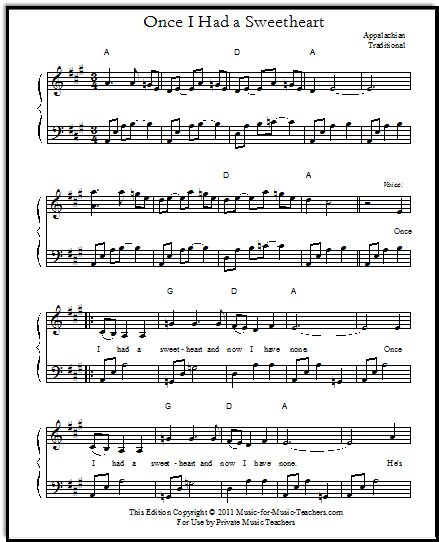
A singable folk tune with pretty, reaching intervals, repeated phrases and a plaintive story
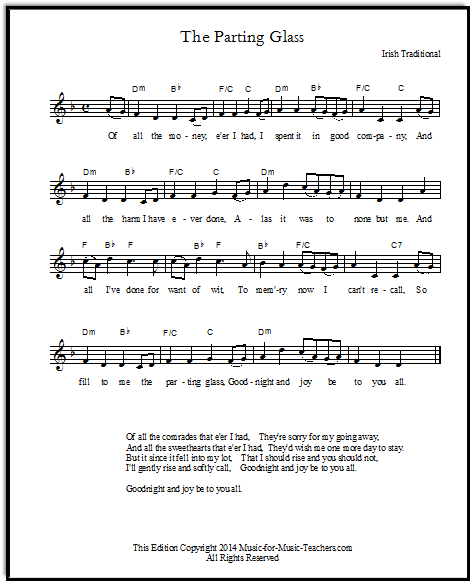
A very popular Irish melody about saying goodbye.
You will find many versions of this poignant and lovely song.
I tell my voice students that if they can't read music, they will be a DRAG on any group of which they are a part.
That if they CAN read and interpret music intelligently, their future choir directors will bless them for it, and come to rely upon them as an important member of the group.
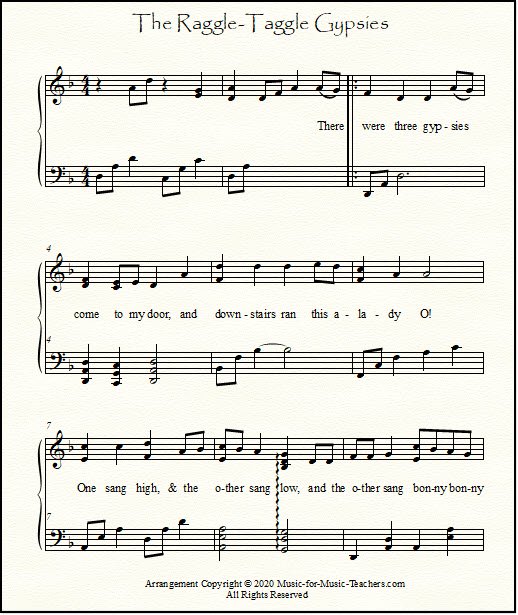
What a fun song this is! Full of energy - and pretty, too!
Like a ballad, it tells a story of a lady who leaves her new-wedded lord with his house and lands, to go off with the gypsies.
Room for expression and a bit of acting.
The Riddle Song (I Gave My Love a Cherry)
A lovely folk song, with intriguing lyrics that pose one question after another.
Very pretty and satisfying.
In the keys of F and G.
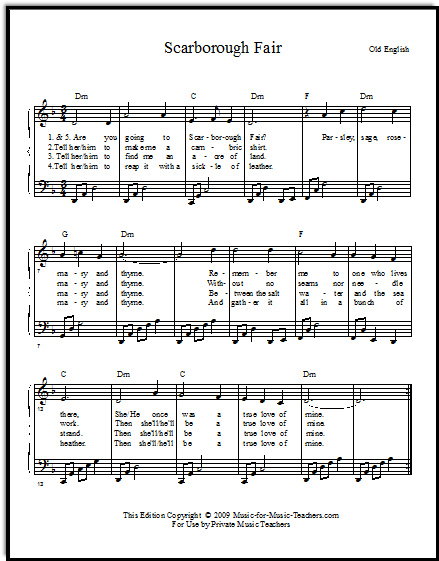
A lovely, familiar minor song from England that every singer should know.
This is a very simple accompaniment.
As a vocal teacher, you need to keep your own voice in shape so you can constantly demonstrate techniques and ways of using the voice.
That means you will need to be singing a little bit every day. Maybe you even want a course on singing for yourself to give you the confidence to teach others.
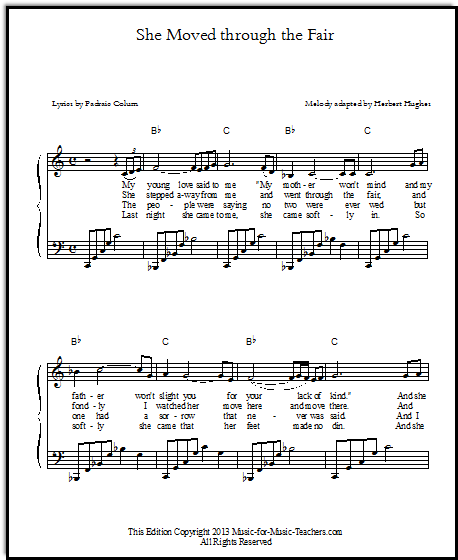
A different kind of love-story-gone-wrong.
The beloved dies, but she visits him one night to say that it will not be long before their wedding day...
Atmospheric and a bit creepy..
Be cautious in your choice of music for your singers. As I say on my "Song to the Moon" page, it is best to avoid opera music if you are not a voice specialist. There is too much opportunity to damage young voices.
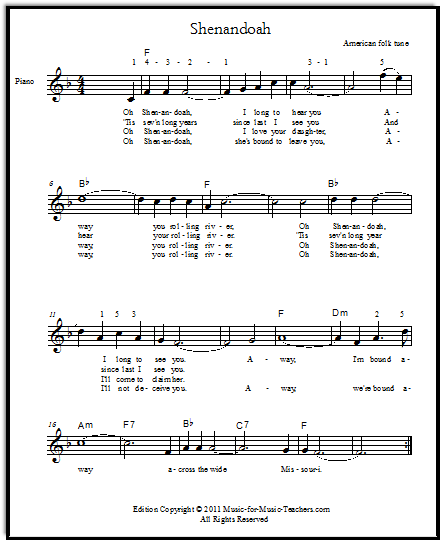
This is a wonderful song you may have sung in high school!
It is genuinely American, with somewhat puzzling but intriguing lyrics, but great scope for young voices.
This is a lead sheet - no piano accompaniment yet!
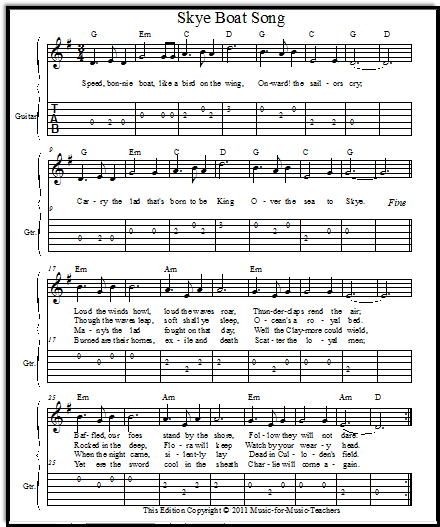
This one is just a lead sheet.
From Scotland, this rhythmic song tells of the escape of Bonnie Prince Charlie over the sea after a great & terrible battle.
There are lots of great books for singers and teachers, too. Some I've benefited most from are:
Discover Your Voice: How to Develop Healthy Voice Habits by Oren Brown. He was a teacher at Julliard School of Music. The book comes with a CD, but may be quite expensive -- I paid over $60 for it, several years ago.
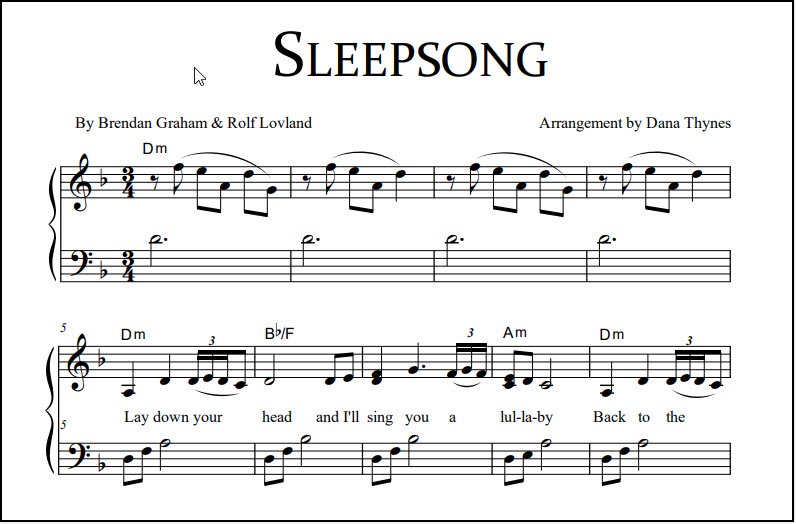
Not public domain, but enchantingly lovely. Your students will love this song. It is offered as a piano/vocal arrangement plus a lead sheet.
Do not miss Sleepsong!
"The Diagnosis and Correction of Vocal Faults: A Manual for Teachers of Singing and for Choir Directors (with accompanying CD of sample vocal faults)" by James C. McKinney was also not cheap -- over $25 -- but it is very worthwhile.
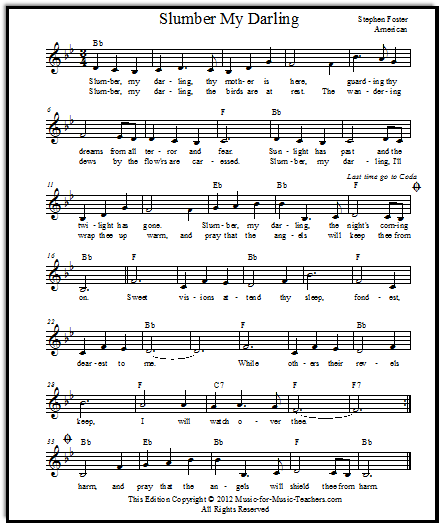
Another lullaby, this one by Stephen Foster, an American composer of the 1800's.
Very nice as a young girl's first recital song.
This one is a lead sheet.
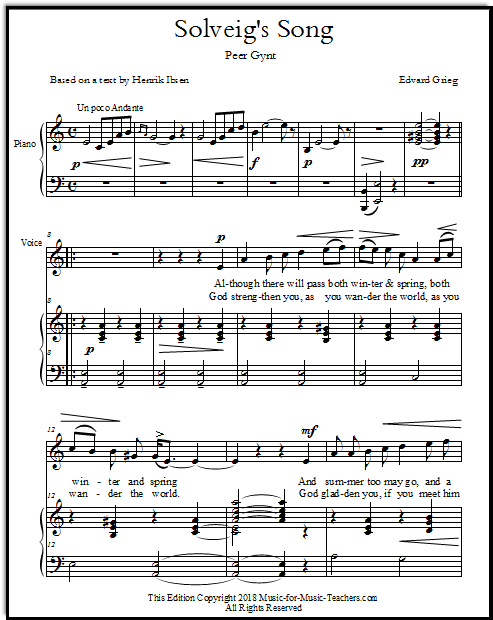
Perhaps the most famous piece from Grieg's Peer Gynt Suite.
This beautiful song is offered in both English & Norwegian, and in several keys.
How to Sing by Graham Hewitt is a slim book, right to the point, with lots of exercises. It gives a good overview, and is inexpensive.
The Rock-N-Roll Singer's Survival Manual by Mark Baxter was an interesting read. I bought it with a video of the same name.
I was floored by how relaxed Mark Baxter's singing voice sounded.
His business is helping people who scream for a living -- rock singers -- get up every day and do it all over again without permanent damage to their voices.
He has a DVD by now, which can be found, along with a Q and A forum and lots of good advice, on his website, VoiceLesson.com.
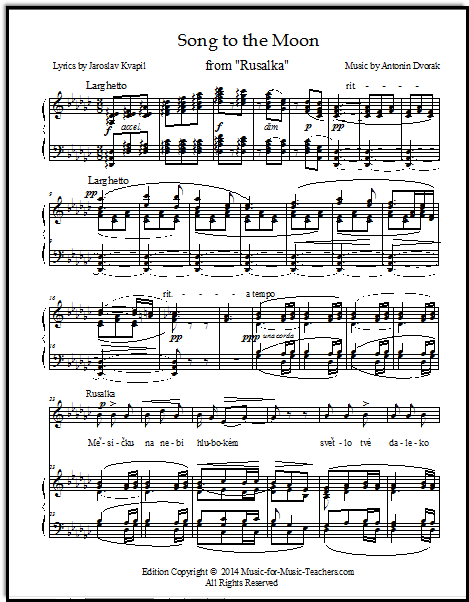
This appeal to the moon is a song sung by a mermaid who is struck with love for a human.
From the opera "Rusalka", this aria is amazingly serene and beautiful, and NOT for young girls (unless you let them sing it in one of the lower keys that I provide here!).
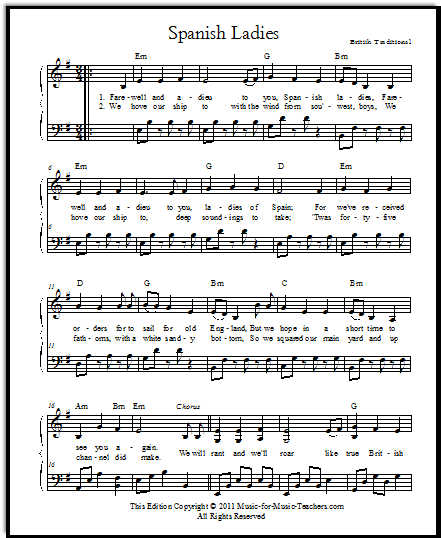
An old English sea chantey, saying "Farewell, and adieu!"
Boys like this song too.
It's very fun with guitar backup, and I have sung it together with boys at more than one recital!
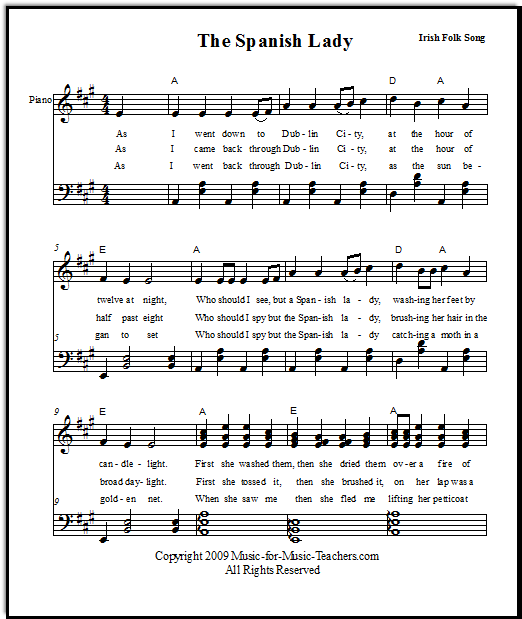
An energetic romp of an Irish song!
Very fun in groups.
There is some vocal harmony in this song.
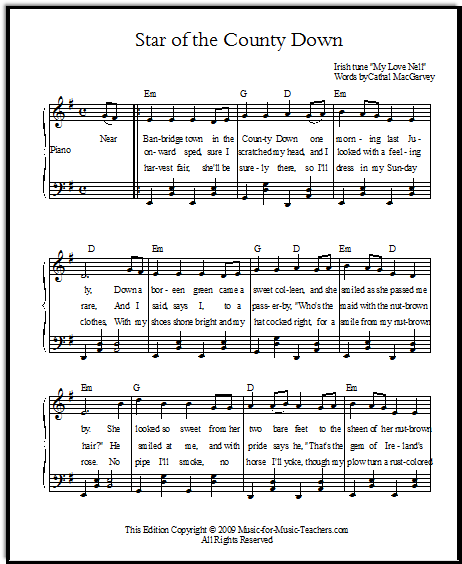
This fun Irish tune practically sings itself!
High-energy; kids really like it.
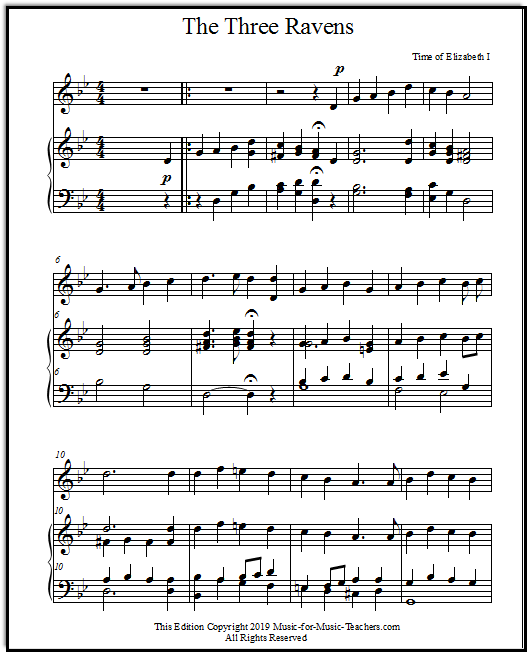
This is an old and beautiful minor song from Elizabethan or older times, with a melancholy story about a knight, "slain 'neath his shield."
The ravens are sitting in a tree, discussing him and the companions who cling faithfully to his side.
I have placed all the lyrics on page two of this song.
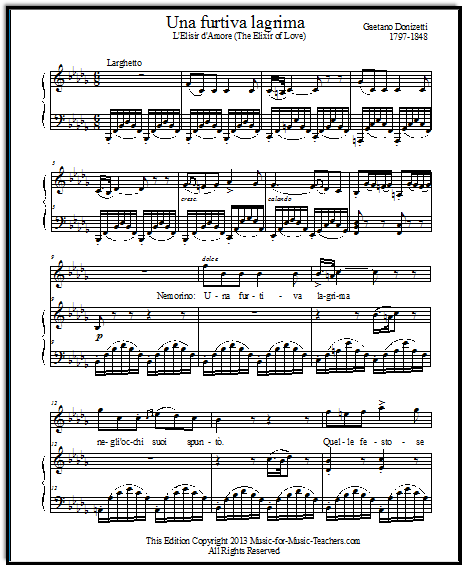
"A secret tear" is the meaning of this song's title. From an opera by Donizetti, this male aria has many soaring phrases, room for expression, and a cadenza.
In a minor key, you might think the lyrics were sad if you didn't translate them.
Actually, the singer is overjoyed!
There are some older CDs and DVDs, books and VHSes available - or maybe not available! - from a couple named "Beatty" whose company is called "The Vocal Coach."
They have many products, and it looks like some of them might be hard to find, but still available -- I found mine new in a homeschool catalog called "Rainbow Resource."
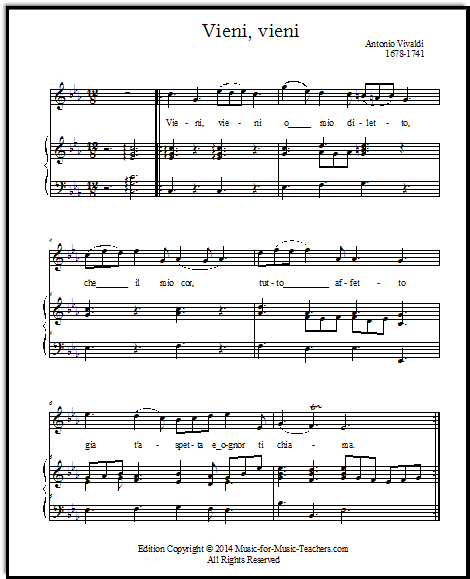
"Come, come, o my delight!"
Another minor piece, slow and lovely, offered in several keys.
This song has a stately feel about it, with a slow crescendo.
Amazon lists quite a few of them, such as Maximum Vocal Performance. One of their CDs about breathing exercises has been very useful to me, and I continue to use some of the exercises.
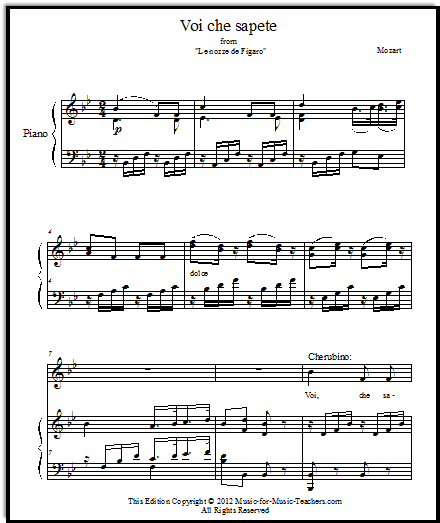
Voi che sapete, from "The Marriage of Figaro"
This is a charming aria by Mozart!
A young boy asks:
"You who know, tell me why suddenly I am hot, then freezing cold?"
The fire and ice in his blood can only be explained by the awakening of love - or at least, his dawning awareness that females are more interesting than he had known! For sopranos.
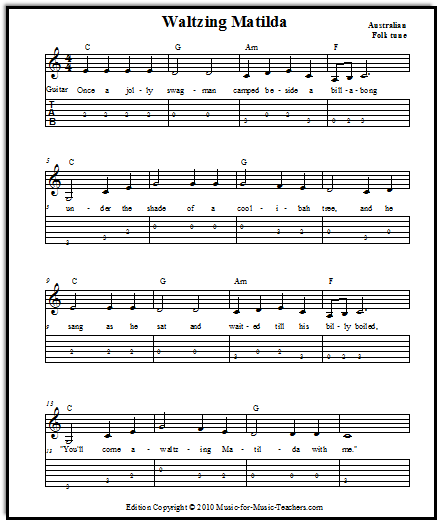
This song from Australia can be sung by boys or girls... luckily, because it is a great favorite, with its lovely melody and its word pictures of billabongs, coolibah trees, jumbucks, and more!
With tabs for guitar players.
Another one I like is Singing for Dummies. Yes!
There's a lot of information that is obvious in it, as must be the case with all beginning manuals, but there is also much that is very insightful, and advice stated in ways I haven't run across elsewhere.
That's helpful, because singing is a funny process...
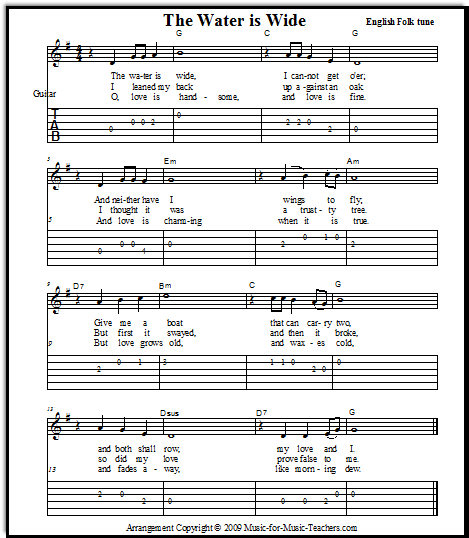
The Water is Wide - easy guitar songs!
Such a pretty song, which you may have sung yourself in high school.
Lovely old-fashioned lyrics, about love betrayed.
So far, this is only a lead sheet or beginner piano sheet.
Words and images are the necessary tools of a voice teacher. And different words will get concepts across to different singers.
After all, you can't say, "Press this key and you will hear an 'A.' Pluck these strings and there is your chord."
Instead, the body is the instrument.
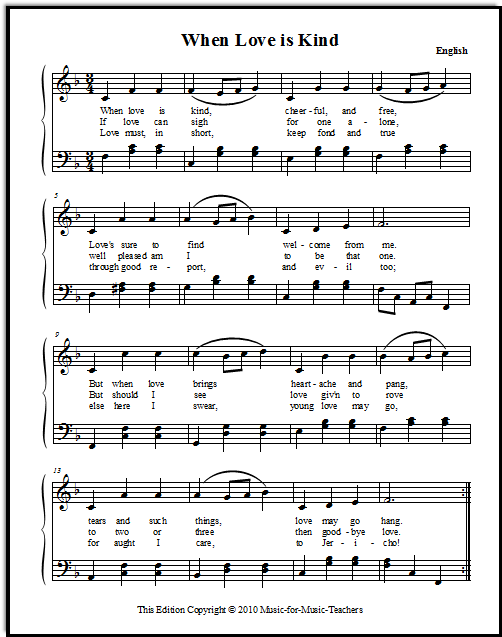
A song with imitative phrases that build upon each other with a slightly larger interval each time - good for developing aural accuracy!
Additionally, it is the kind of piece with lyrics that make for good articulation practice.
Oh, and it's PRETTY too!
This is an excellent first semi-classical song for a beginning singer.
So, vocal teachers rely on images and words to get their singers' muscles working the right way.
Listen in on a voice studio, and you are bound to hear the oddest suggestions:
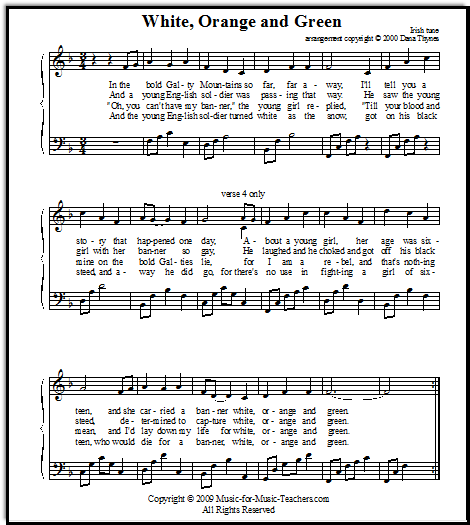
Kids love this song about a brave Irish girl who defies a British soldier who wants to take her banner - her Irish flag - away from her.
I love it too, and am always glad when a new student starts this song.
There are multiple opportunities for working on phrase elongation, crescendo, and even an Irish accent if it strikes your fancy.
What's wonderful is that the melody is lovely, too!
I can remember my own voice teachers saying odd things like,
- "HOOK the sound forward, behind your teeth...
- "Make your jaw heavy, like it's filled with lead and slowly dropping...
- "SPIN the tone; imagine an orange spinning just beyond your forehead..."
And much WEIRDER things than that!
Teachers seek to manipulate sound as if it has the kind of physical substance you can touch.
Wiegenlied is the "Cradle Song" above; the melody is simple but satisfying.
The lyrics are in German, but I have some suggested English translations on the page.
Once thought to have been written by Mozart.
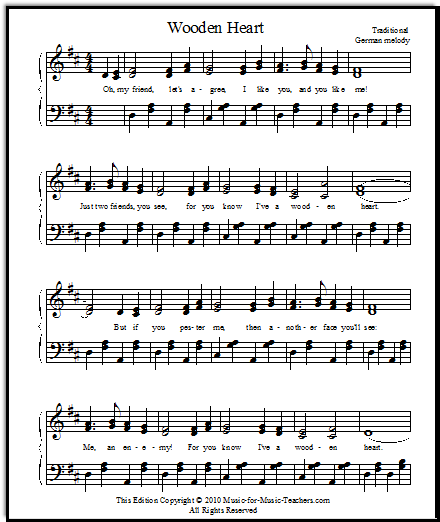
This cute German song was made famous in the United States when Elvis Presley sang it to the words "I don't have a wood - en heart..."
Check out the easy harmony for two singers!
Hymns, Anthems, & Christmas Carols
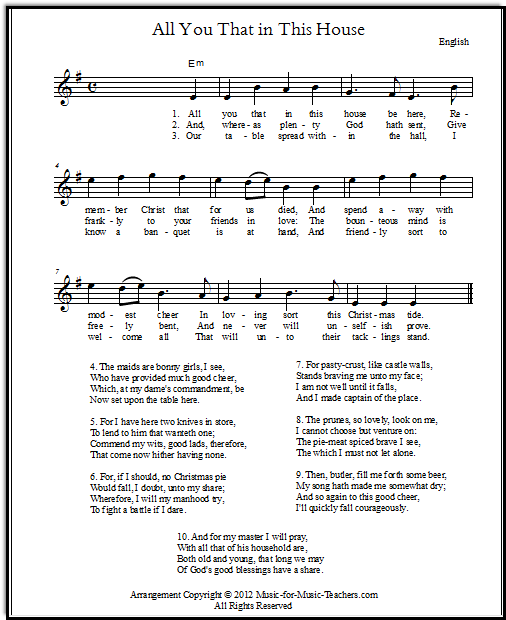
With a strong minor melody, this is a Christmas carol that is beautiful but little-known.
Now with a lovely piano accompaniment.
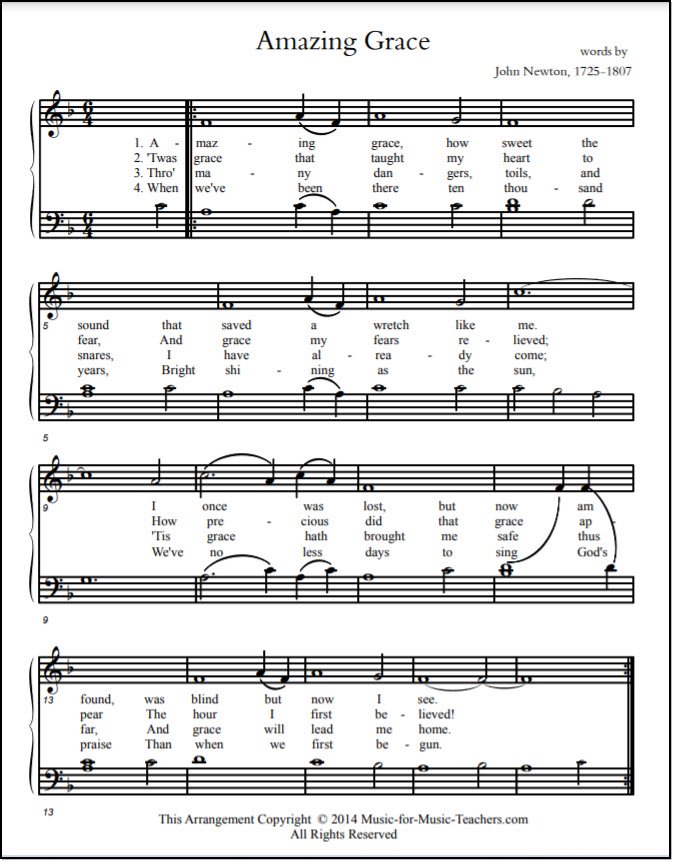
An easy-to-read, easy-to-count version of Amazing Grace, for piano or a few singers!
Though written for piano, the setting is nice for voice too.
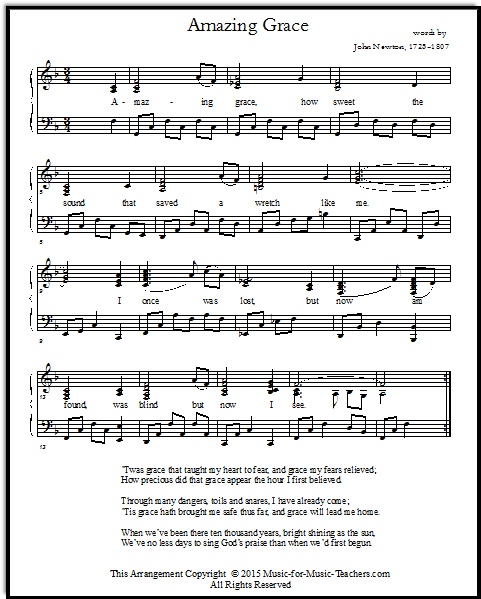
Amazing Grace piano sheet music
Two more elaborate accompaniments, which make a nice background for singing. The heavier one (shown here) uses right hand chords and inversions, better for a group of singers; the other has a single melody note, resulting in a much lighter feeling - more appropriate for a soloist.
All the usual lyrics are there for singers!
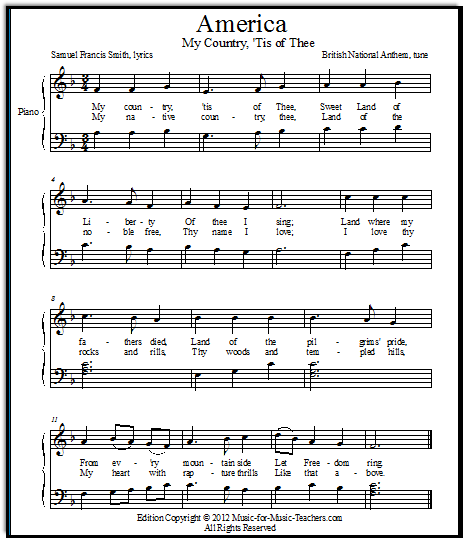
America (My Country 'Tis of Thee)
The well-known anthem which is also known as "God Save Our Noble Queen," from the UK. A simple piano accompaniment in an easy key for children to sing in.
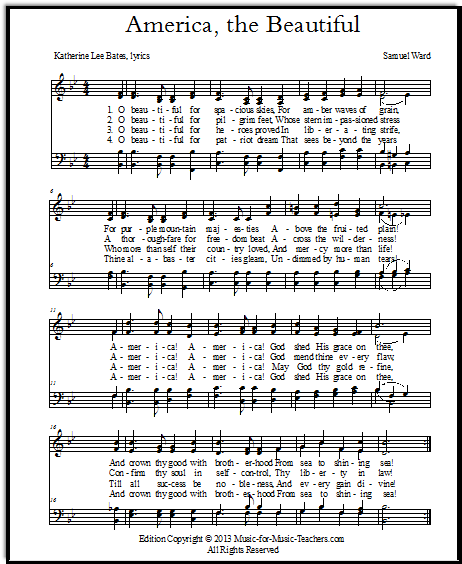
This is "O beautiful for spacious skies..."
An important song for singers in high school, where it is often used to test interval accuracy.
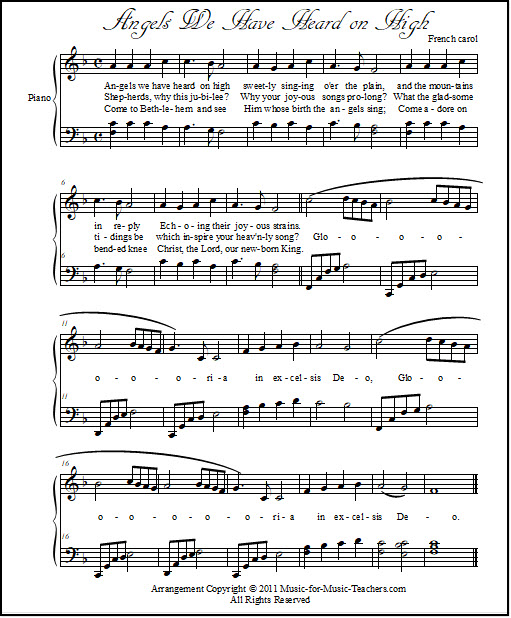
In six different keys, & multiple arrangements. This carol is a great favorite because of the "Gloria" section, which is so fun to sing!
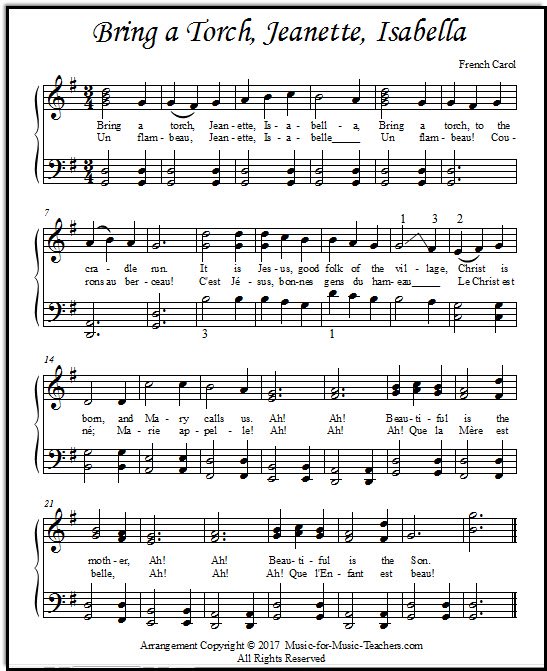
Bring a Torch, Jeanette, Isabella
A fun and easy Christmas carol for a gathering of singers, or your own pleasure!
From France, with English translation & French lyrics.
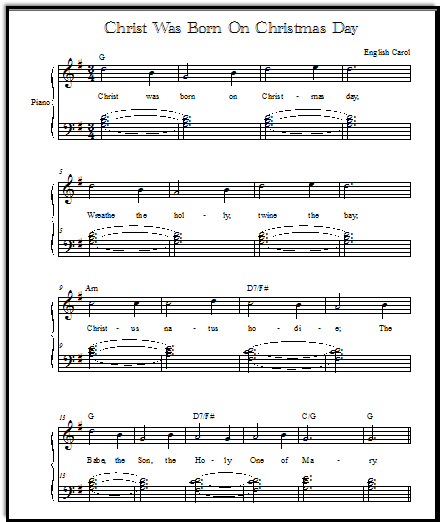
Christ Was Born On Christmas Day
A short & cheerful carol, with a mixture of Latin & English lyrics.
Easy piano accompaniment.
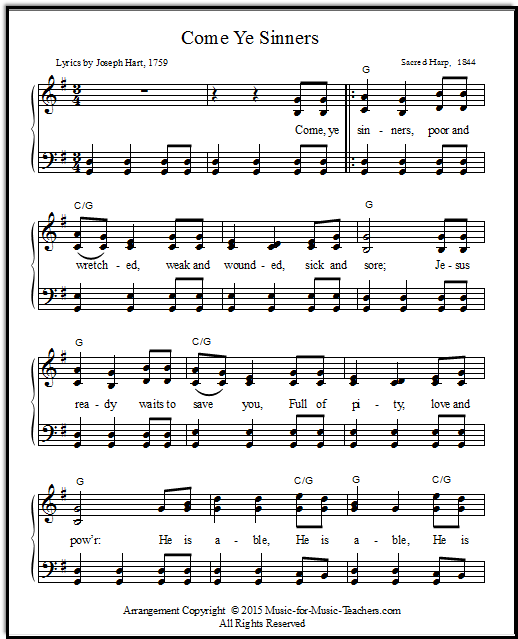
Come Ye Sinners, one of the old gospel hymns
This is the Beach Spring melody, from The Sacred Harp. In a major key, pentatonic!
It is engaging and almost sings itself!
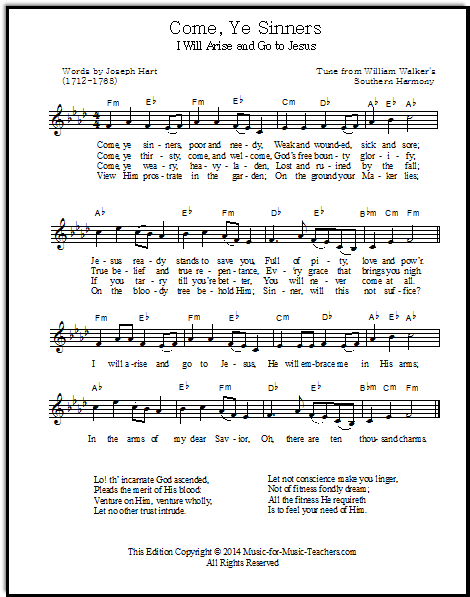
I Will Arise and Go to Jesus, from Southern Harmony. In a minor key, hauntingly lovely!
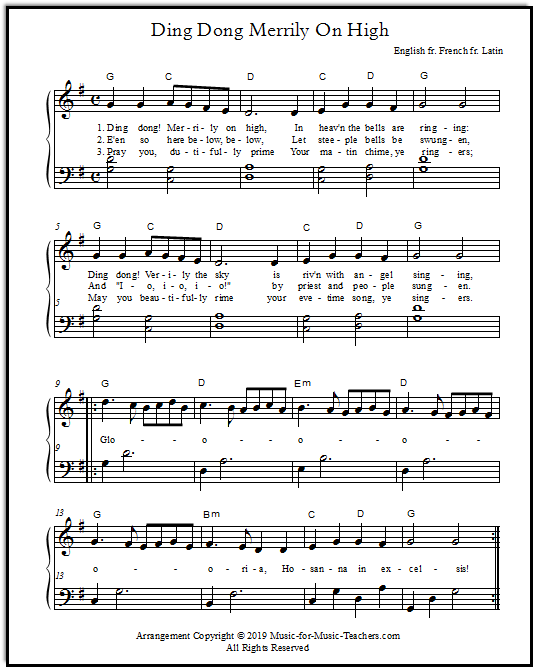
An energetic and pretty Christmas carol, with a lovely "Glo-o-o-o-o-o-ri-a" chorus.
Down to the River to Pray sheet music
What a fun, enthusiastic song this is! Not really a hymn, but a spiritual, this song wants to be sung!
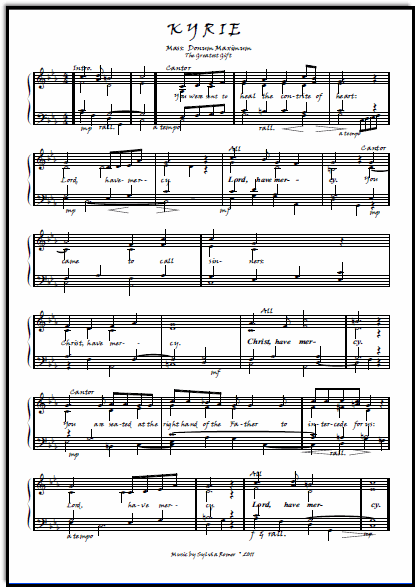
A 24-page mass, donated to this website, for visitors to print & use freely.
I'm the barest beginner in Latin, but I believe the name means "Greatest Gift" - that would be Christ the Savior!
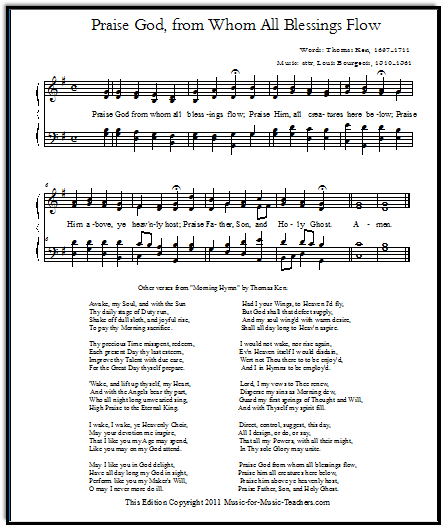
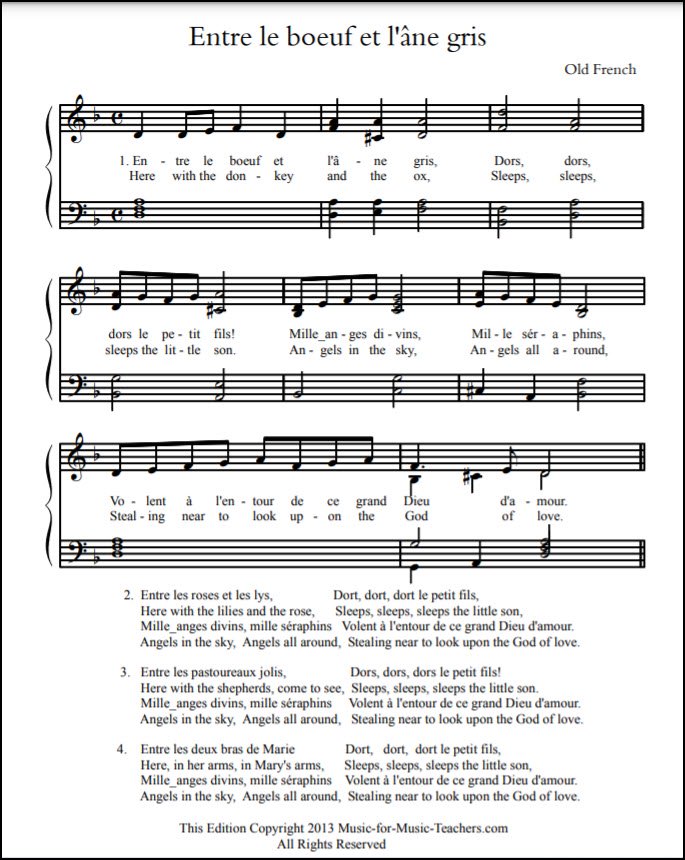
Entre le boeuf (Between the Ox and Donkey)
A lovely minor carol from France. With both French lyrics, and a new English translation, very pretty.
Esther, For Such a Time As This - the story of Queen Esther in the Bible
This 57-page song book includes the repeating chorus shown here, plus 38 verses in which the complete story of Queen Esther in the Bible is told.
It is a dramatic and riveting story, with the planned genocide of the Jewish people over 2,000 years ago!
This piece would work for youth theatre, Sunday school classes, a church program, a Purim performance, or a sing-along. LISTEN TO A VIDEO and see the music.
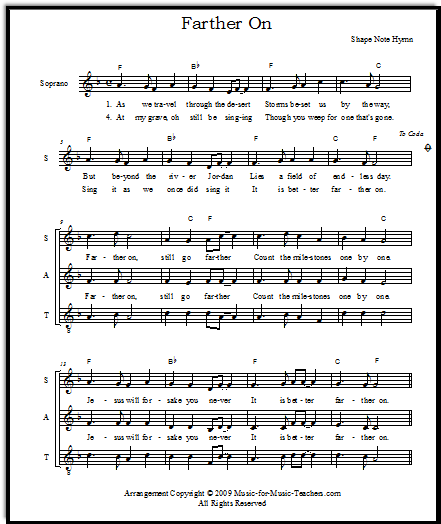
A pretty Shapenote hymn, very old-fashioned, with comforting lyrics.
It talks about heaven, and how "it is better, farther on."
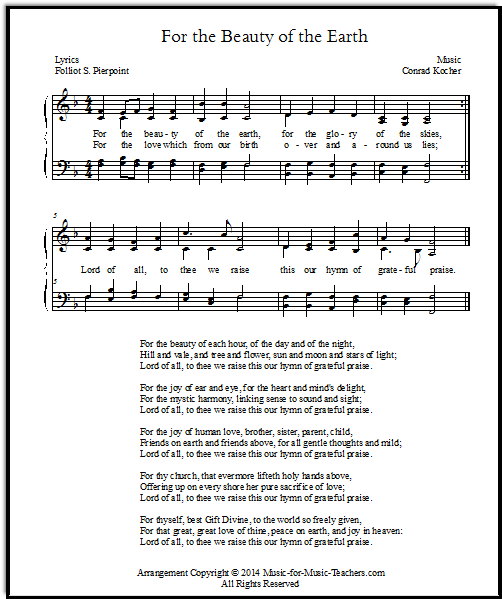
A good hymn for Thanksgiving. Not many people will disagree these lyrics, I think!
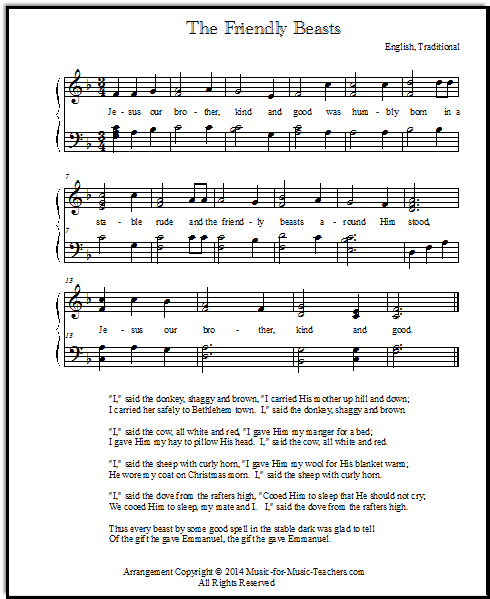
In this carol, the creatures in the barn each sing of their role in the Christ Child's story.
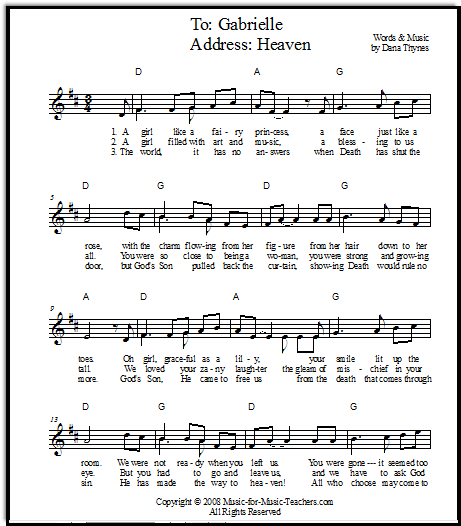
This is a song for a memorial service or funeral. It speaks of a young girl on the threshold of being a woman who died suddenly.
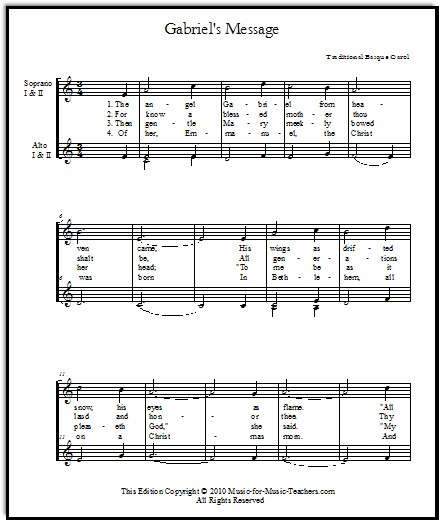
The angel Gabriel appears to Mary the mother of Jesus. A haunting, lovely melody.
Vocal duet.
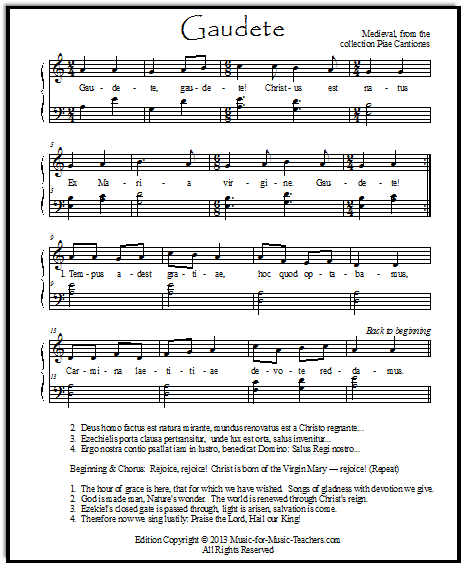
Gaudete free Christmas vocal sheet music
"Gaudete" means "Rejoice!"
With lyrics in Latin, this is an unusual, medieval-sounding carol, with energy and a strong kind of beauty.
With piano-vocal and guitar tabs duet versions!
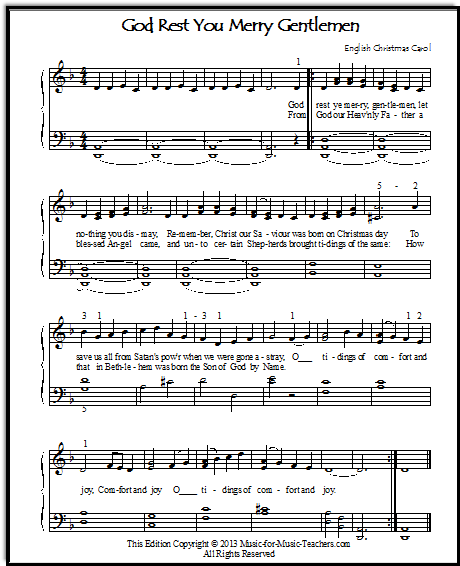
The famous old English carol, commonly featured as a backdrop in British Christmas movies.
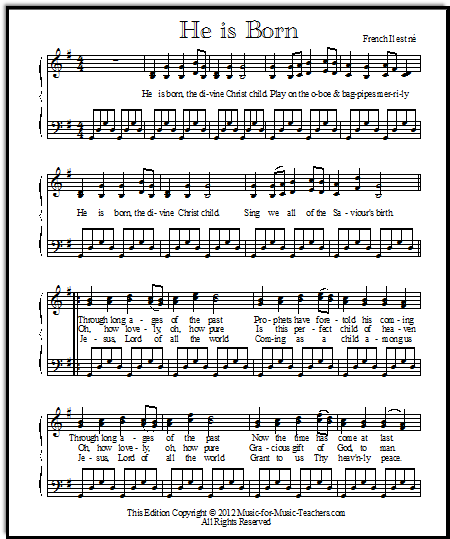
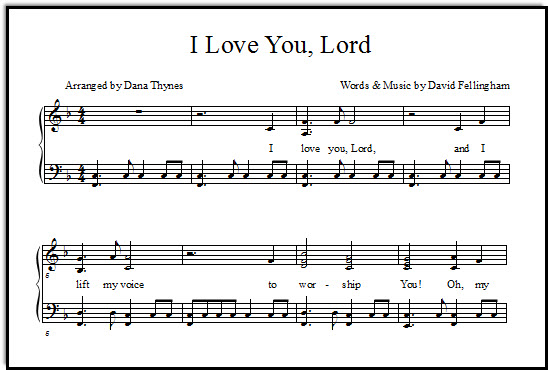
This gorgeous and simple melody will please both beginning & more advanced students - & the long phrases and slow pace are opportunities to learn steady & supported breathing.
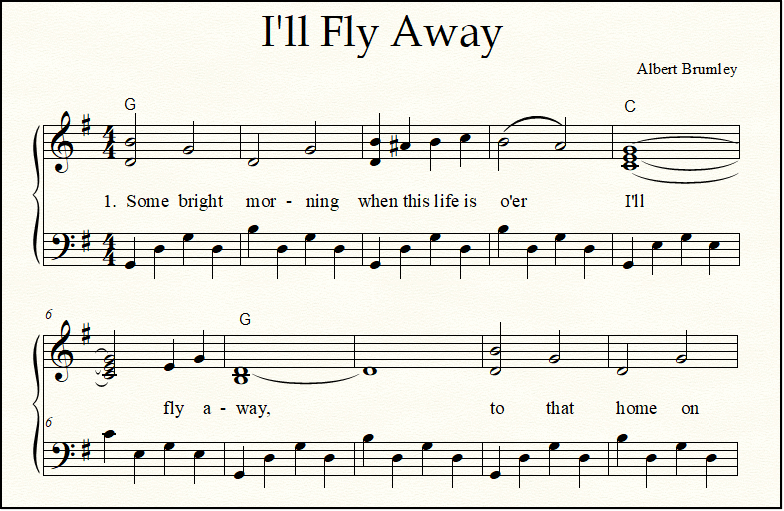
A good song to lift spirits and lighten hearts at funerals, when you are certain of your eternal destination.
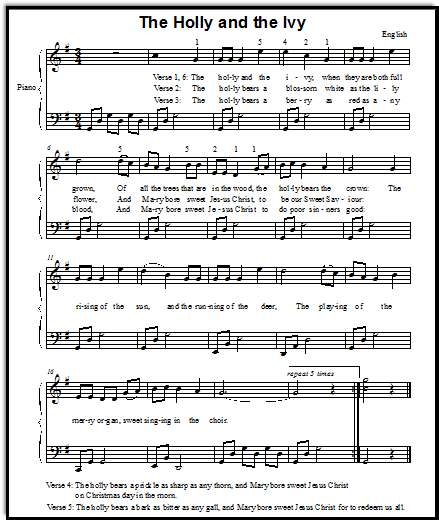
Holly and the Ivy Christmas song lyrics
An energetic, fun, and pretty old English carol. "The holly bears a berry as red as any blood, and Mary bore sweet Jesus Christ to do poor sinners good."
Several arrangements.
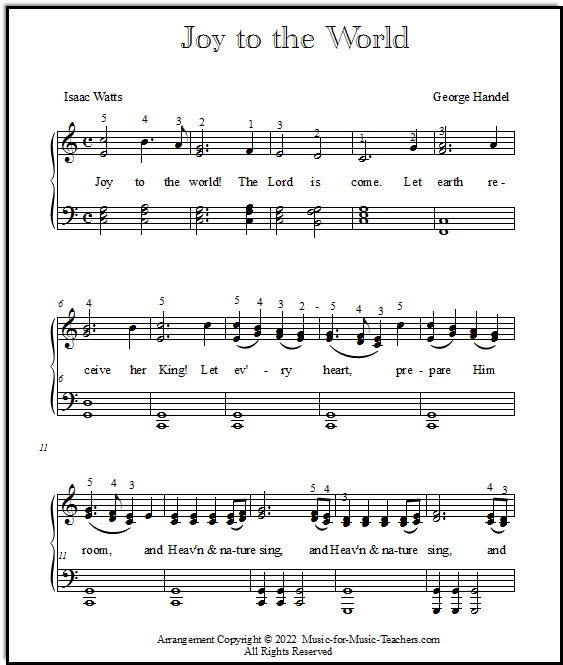
Joy to the World lyrics & sheet music
So far this new page has an easy solo, and an ensemble for voice or instruments, and a lead sheet with tabs for guitar.
No 4-part harmony yet, but that is coming.
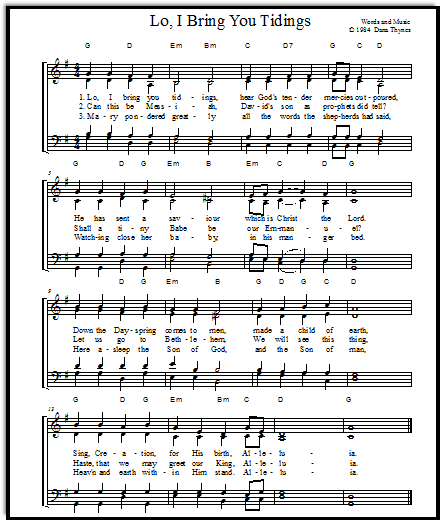
Lo, I Bring You Tidings, with Biblical Christmas carol lyrics
"Mary pondered greatly all the things the shepherds had said, Watching close her baby in his manger bed. 'Here asleep, the Son of God, and the son of man. Heav'n and earth within him stand - Alleluia!' "
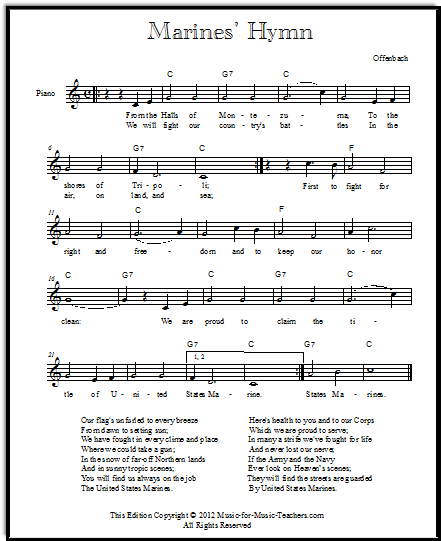
The Marines' Hymn is a famous melody, here presented as a lead sheet.
My father was a Marine in the Korean War who was awarded the Silver Star. He never liked to talk about it, but he loved singing this song.
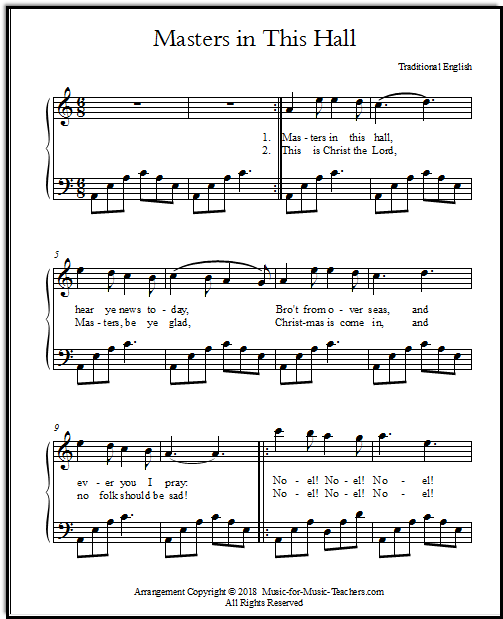
What sets off this Christmas carol are its use of a single chord (mostly), and a melody with strong intervals. It sounds positively medieval!
A song of hospitality and feasts, with difficult but intriguing lyrics! With several new arrangements.
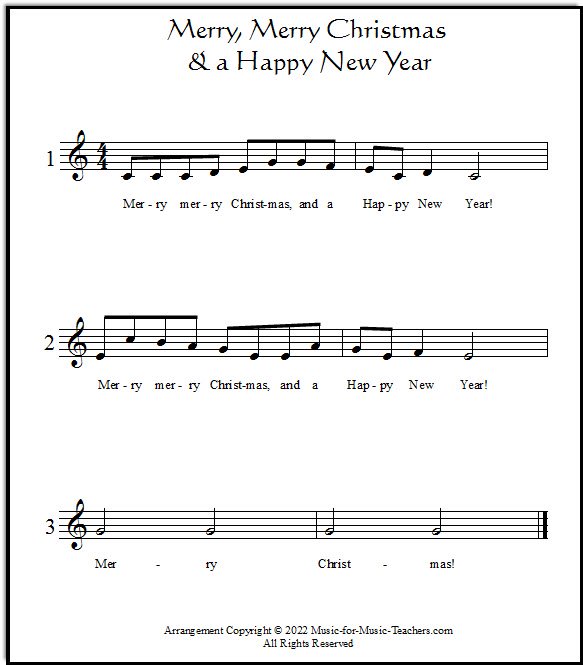
Merry Merry Christmas singing round
A pretty little round to sing around the piano at Christmas time!
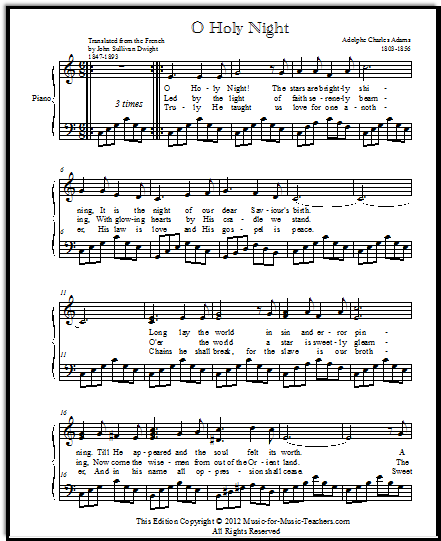
SO BEAUTIFUL... this song evokes the mood of Christmas.
Several arrangements, including a free vocal duet at the bottom of the page.
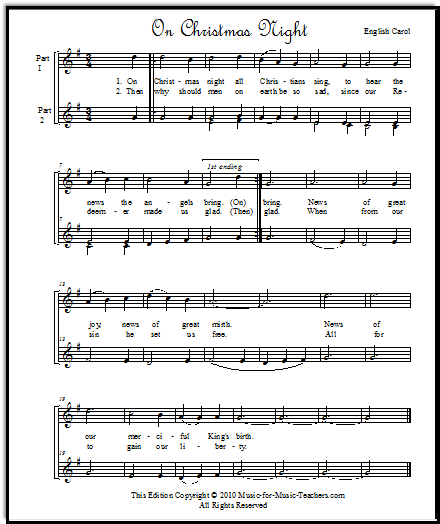
On Christmas Night (Sussex Carol)
A very pretty and short carol. It is offered here as a vocal duet, and also an instrumental duet.
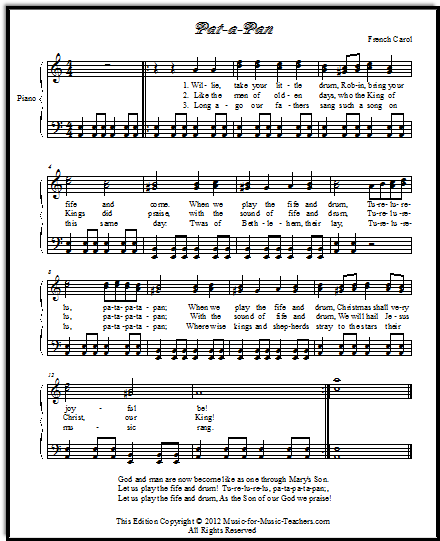
Cute lyrics, & driving energy: "Willie, take your little drum - Robin, bring your fife and come! Tu-re-lu-re-lu, pat-a-pat-a-pan!"
A lovely minor melody.
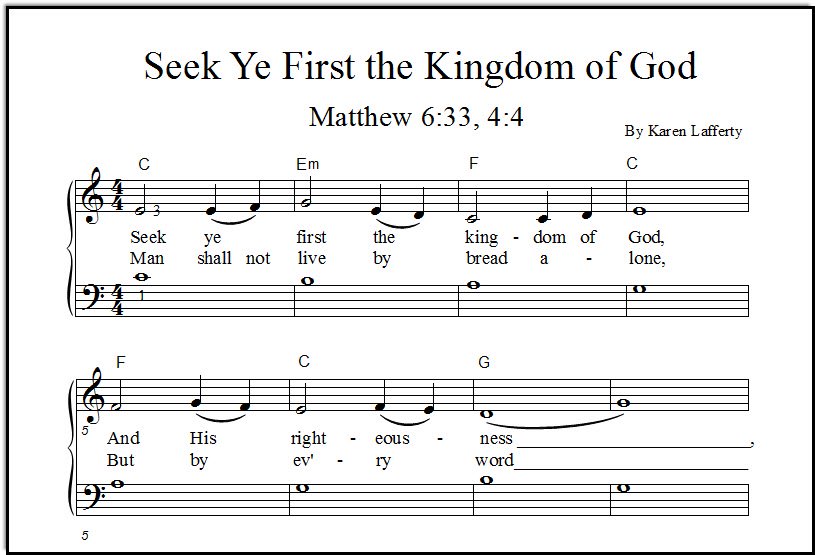
Seek Ye First the Kingdom of God
This easy arrangement is just right for a young piano student who also loves to sing.
Included in this 3-page arrangement is a lovely descant harmony.
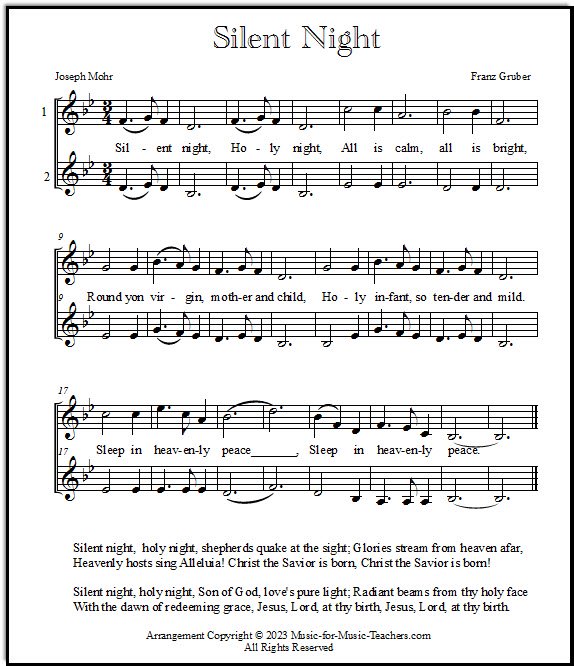
This page is sheet music for Silent Night for SINGERS - I also have a piano page and a guitar page for this Christmas carol.
An easy and lovely singing duet for beginning choirs!
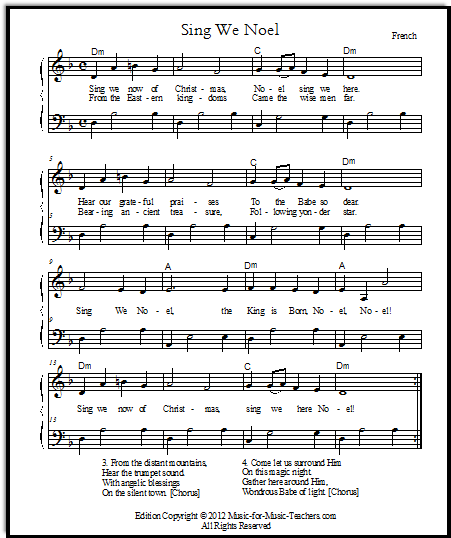
Sing We Noel free Christmas songs
A carol from France, unfamiliar but haunting, with lovely intervals.
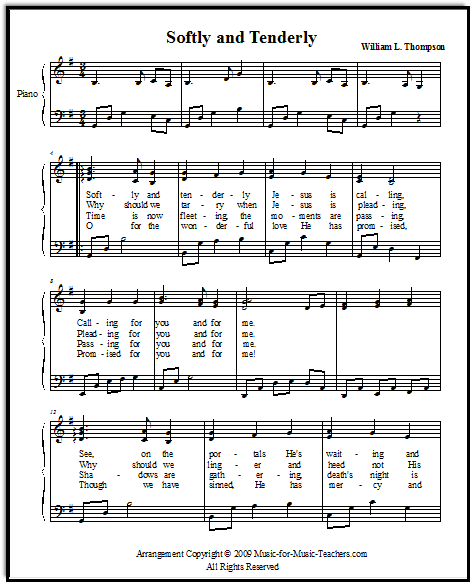
Softly and Tenderly free hymn sheet music
An old hymn; "Softly and tenderly, Jesus is calling... calling for you, and for me."
Sweet and moving.
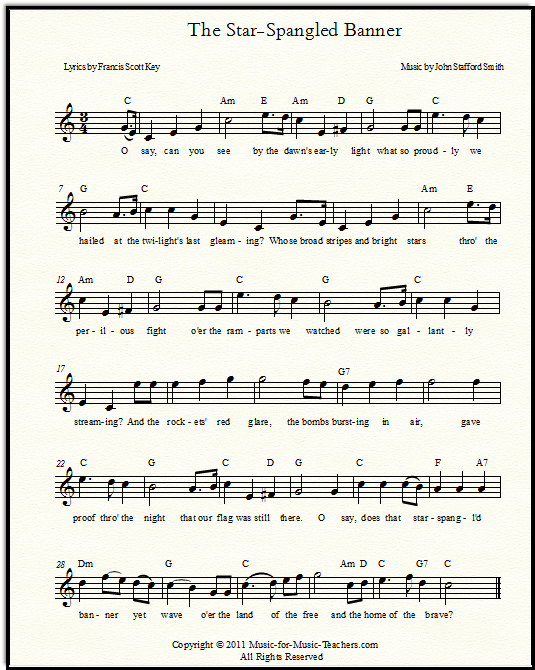
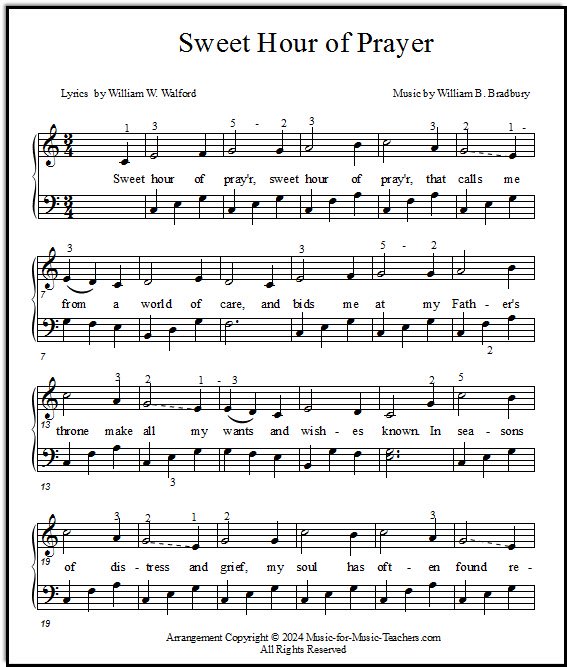
A pretty melody blended with a peaceful message, this is an older song from less complicated times.
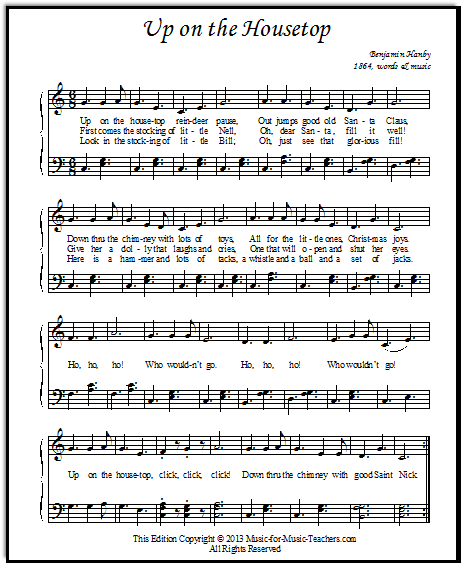
Up on the Housetop - easy kids Christmas piano sheet music
This cute, old-fashioned song is about Santa and his reindeer up on the roof.
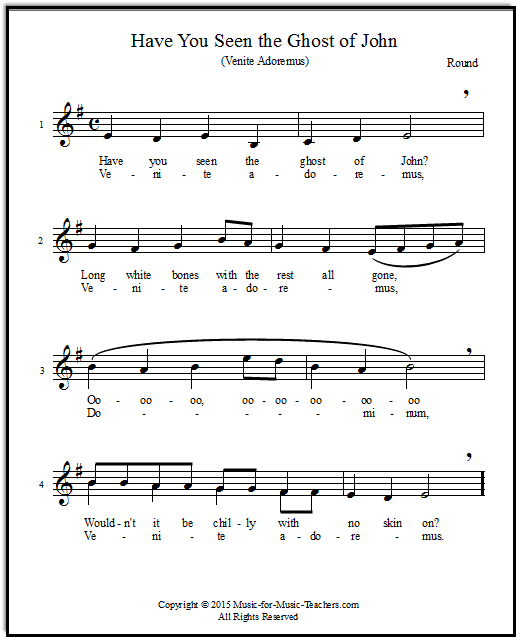
I know this LOOKS like "Have You Seen the Ghost of John."
Peer more closely, however, and you'll notice a Latin text below which says (in English): "Come let us adore, come let us adore, the Lord, Come let us adore!"
This may be the most beautiful round your vocalists ever sing.
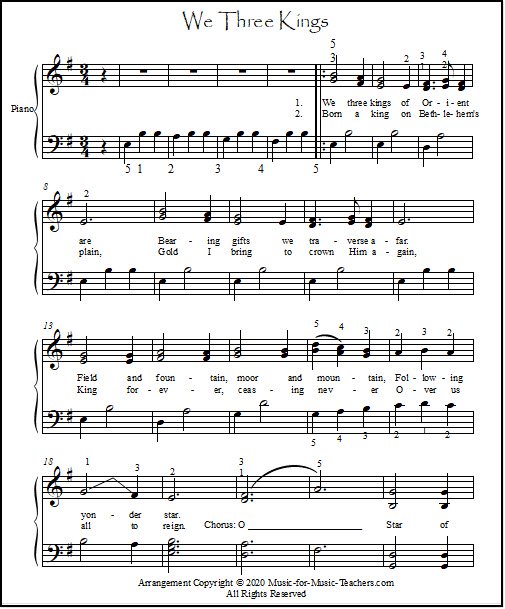
We Three Kings free Christmas sheet music
A beautiful Christmas carol with a feeling of mystery and lands far away.
Several arrangements.
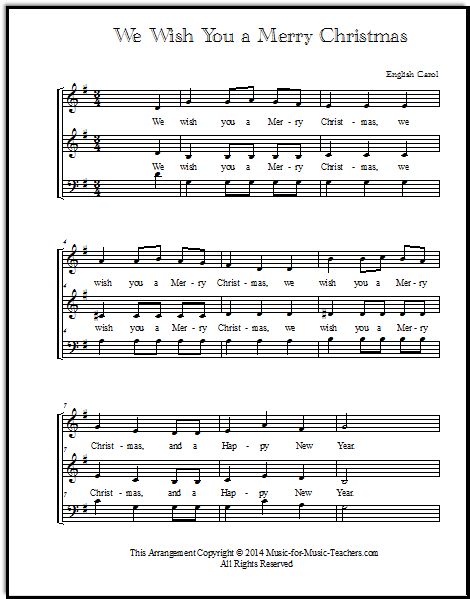
Several arrangements, including a very playable vigorous piano arrangement suitable for crowd singing, and not very hard.
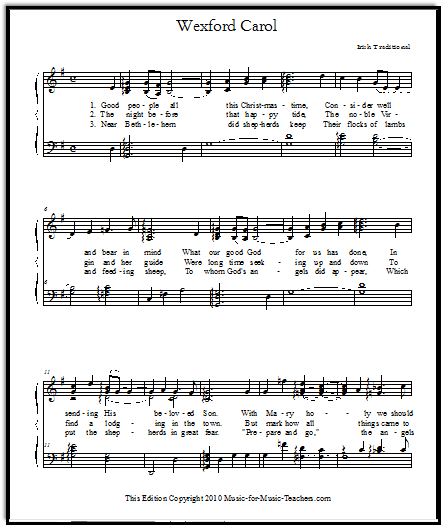
One of the prettiest carols ever, and almost unknown!
With stirring lyrics, very descriptive, that tell the story of Jesus' birth.
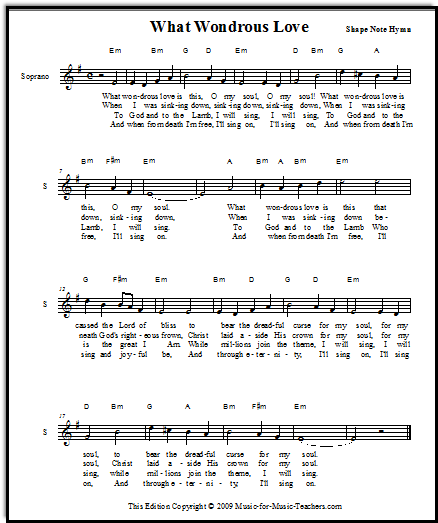
Don't miss this beautiful hymn.
"What wondrous love is this that caused the Lord of Bliss to bear the dreadful curse for my soul?"
This is the most familiar melody for these lyrics; below, see a different tune altogether.
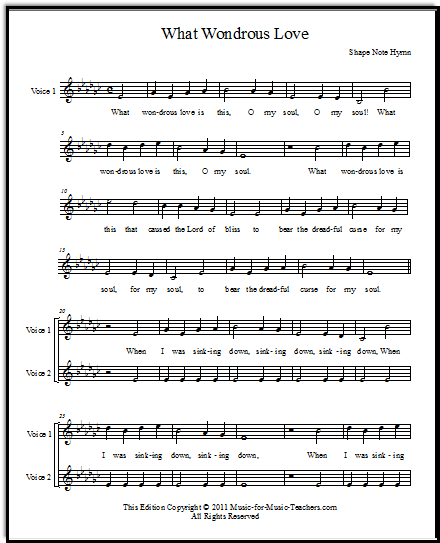
What Wondrous Love, a ShapeNote version
A different melody altogether than the commonly known version.
This page features a 4-part harmony arrangement, with a bluegrass or even ShapeNote feeling. And BEAUTIFUL.
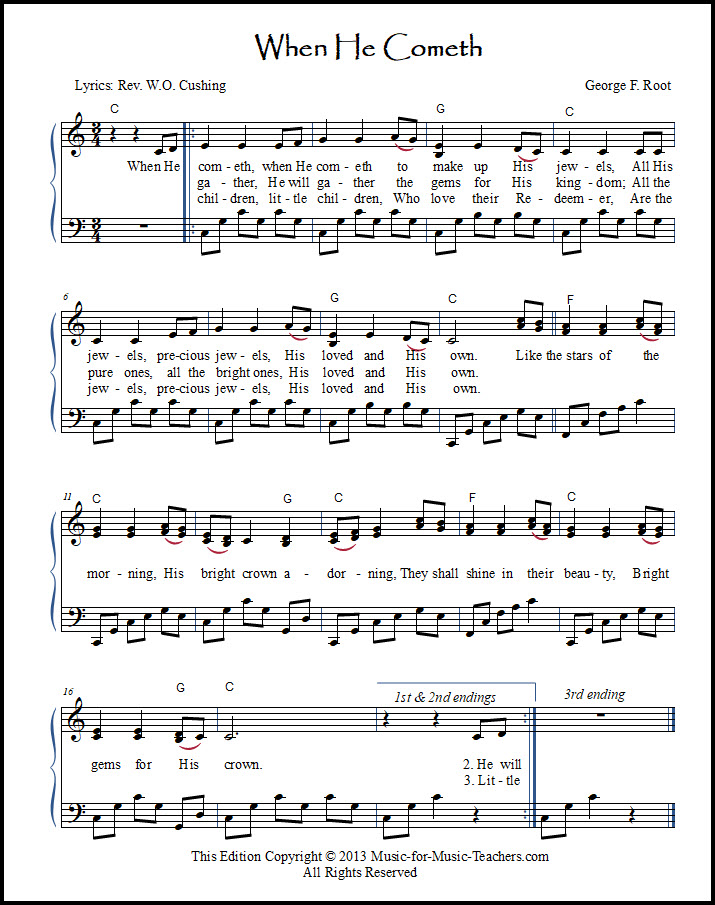
Easy to learn, this song is very pretty.
It is a sweet song about how God treasures little children. "All His jewels, precious jewels, His loved and His own."
There is an easy harmony in the chorus! My students enjoy singing this piece.
Rounds
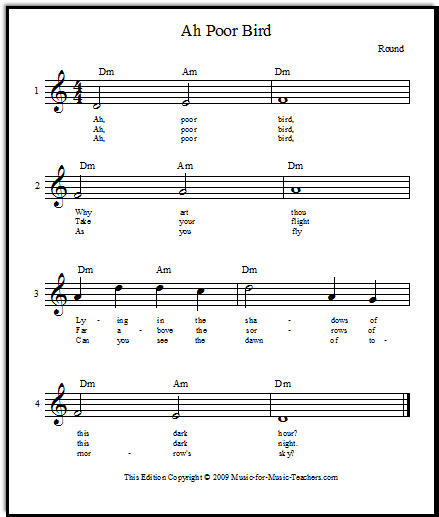
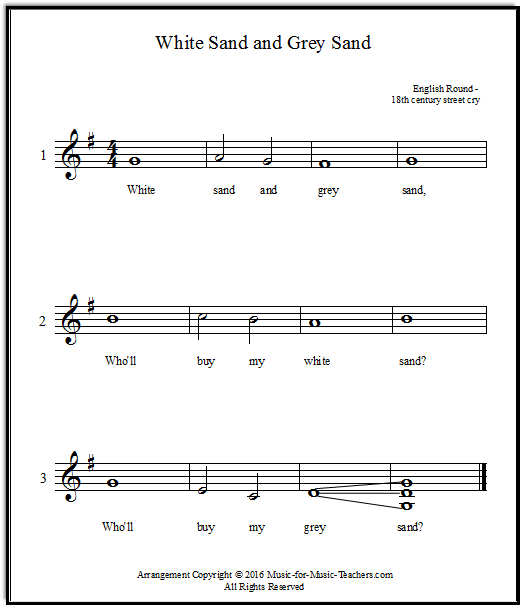
A pretty round with a reach of an octave, slow-moving notes, and easy intervals.
The scale-wise movement makes this song easy for a beginner.
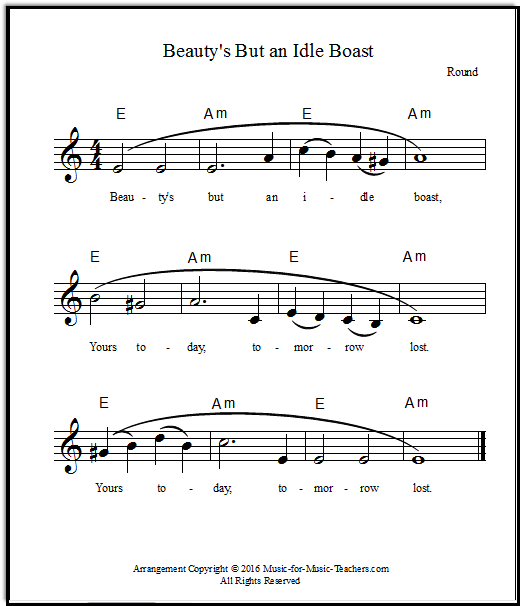
With lyrics from an older time, this is more difficult than many rounds, but compensatingly more beautiful, with more complex harmonies as well!
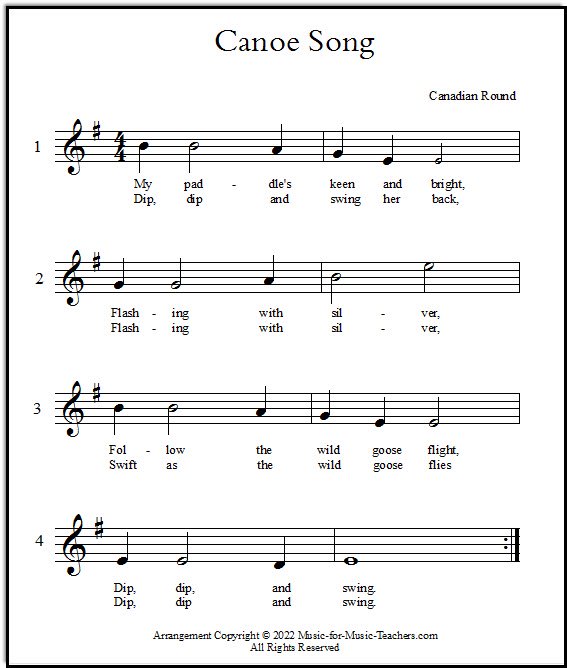
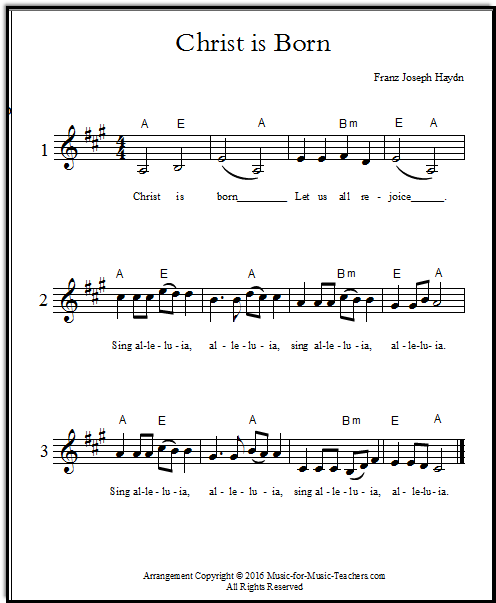
Christmas rounds to sing "Christ is Born"
New lyrics for an old round by Haydn - well-suited to a mix of voices, a satisfying round
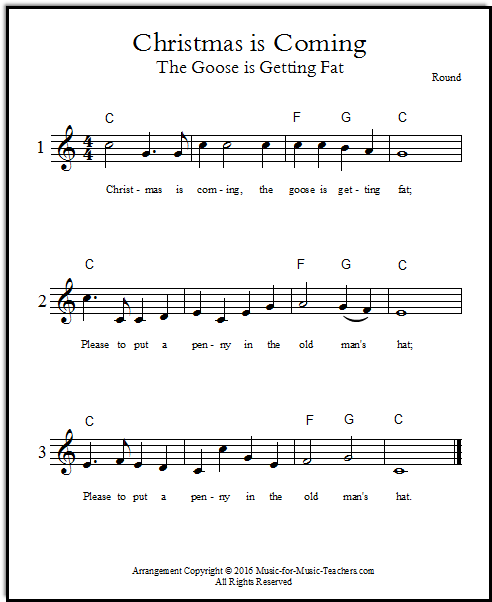
Christmas is Coming, the Goose is Getting Fat
Lots of big interval jumps, even octaves, make this round fun and tricky.
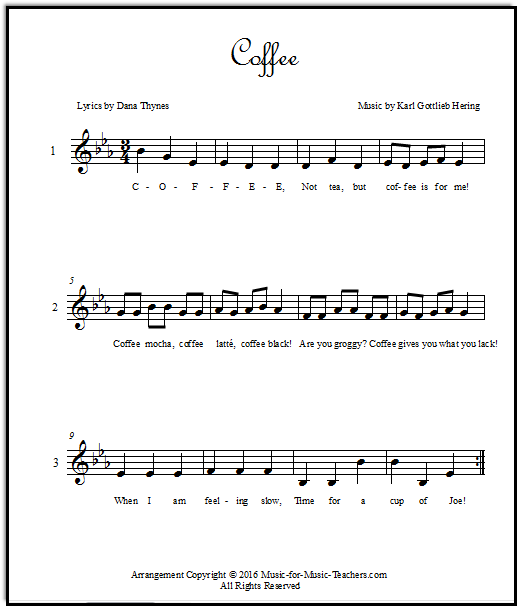
Originally from Germany ("Kaffee"), this is great fun to sing! In fact, it is students' #1 requested round.
I have it here in several keys.

Difficult! Quite difficult for beginners, this beautiful round works best with a bigger group of singers, or even instrumentalists, unless your singers are experienced with harmony
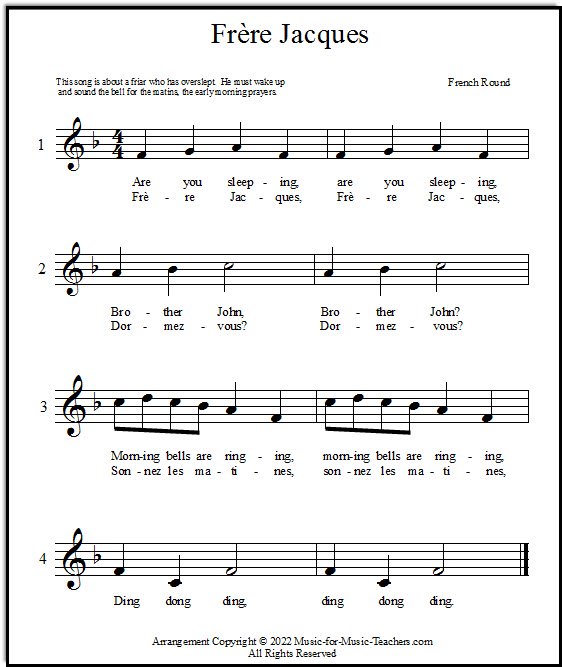
Give your choir or beginning singers the famous Frere Jacques song in English and in French, in 3 keys: C, F, and G.
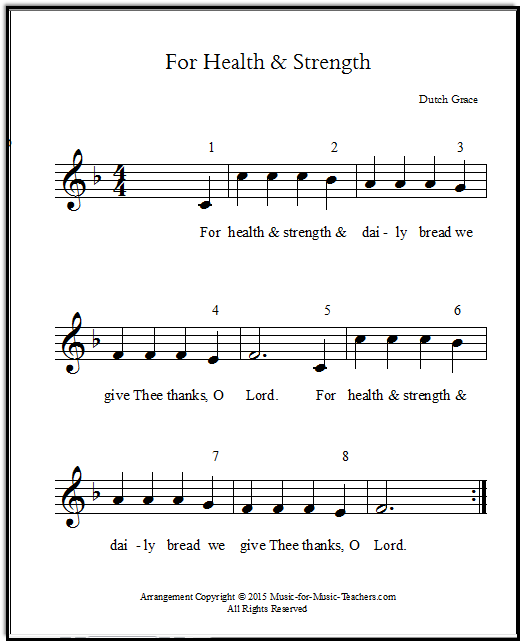
For Health & Strength & Daily Bread, a prayer for Thanksgiving
Pretty, and fairly easy, as it moves primarily in descending steps, this is a wonderful Thanksgiving song!
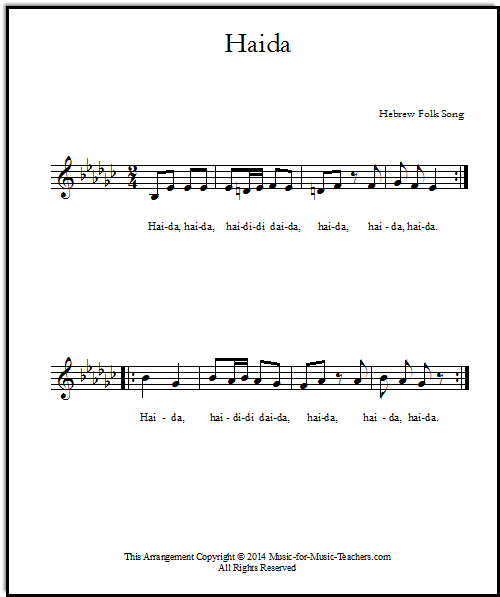
Haida singing rounds for the classroom
Haida is vigorous and fun - there are two spots that invite a clap, adding to the rhythmic feeling of this song.
A favorite, frequently requested!
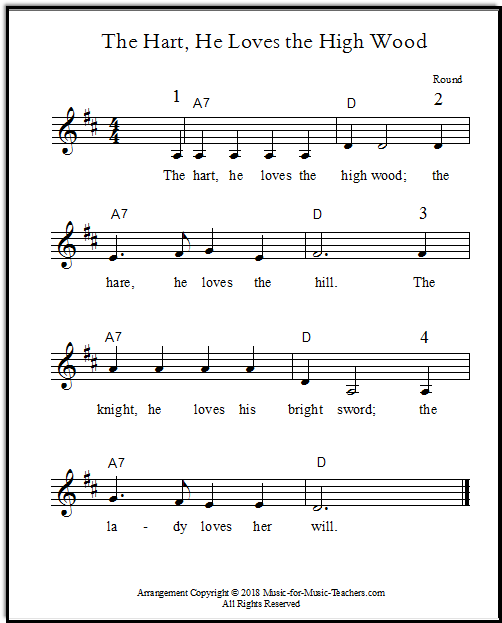
The Hart, He Loves the High Hill round music from England
This brisk but pretty round from England compares a deer to a rabbit, and a man to a woman!
Have You Seen the Ghost of John
An unbelievably pretty round, with lyrics that DO NOT do it justice!
Make up your own, or have fun singing "oooooo" to the original lyrics, or try the Latin lyrics I sometimes use.
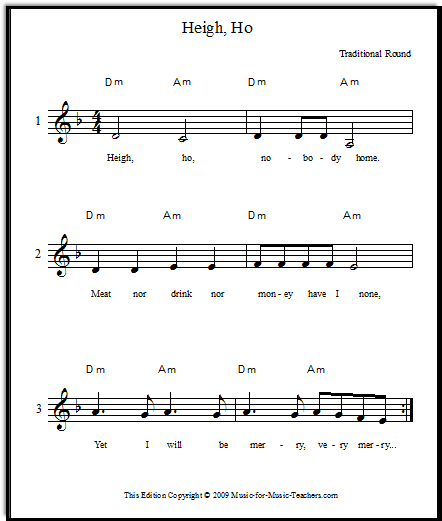
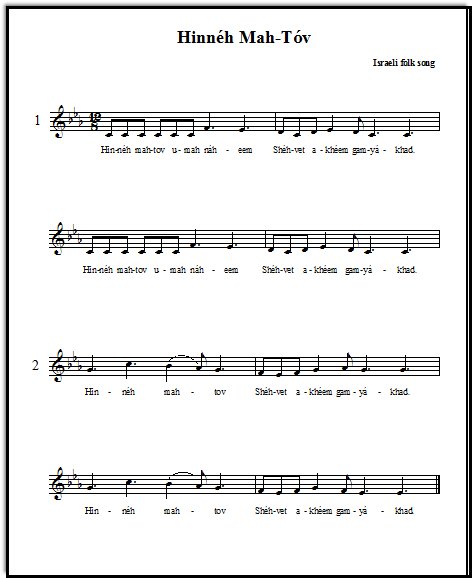
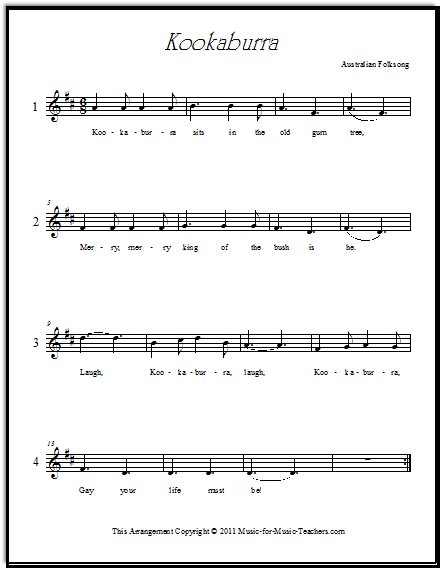
Merry Merry Christmas singing round
A quick study with few complications, this is a a fast, energetic, and pretty round!
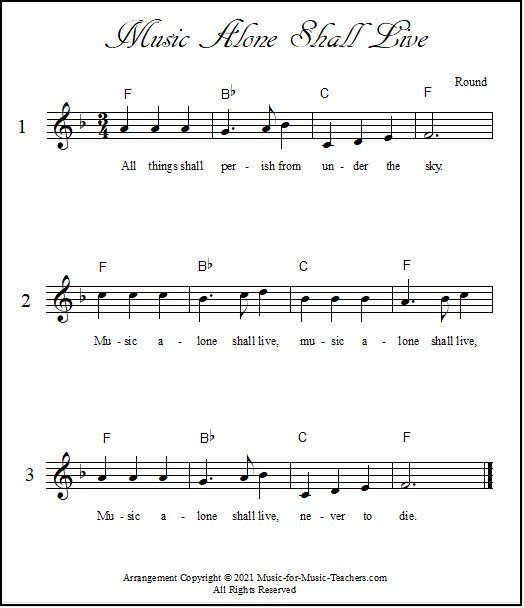
A very pretty little tune with nice major harmonies.
Line 1 and line 3 are just the same notes... so there are only 2 lines to learn!
This pdf comes in the keys of C, D, Eb, F, & G.
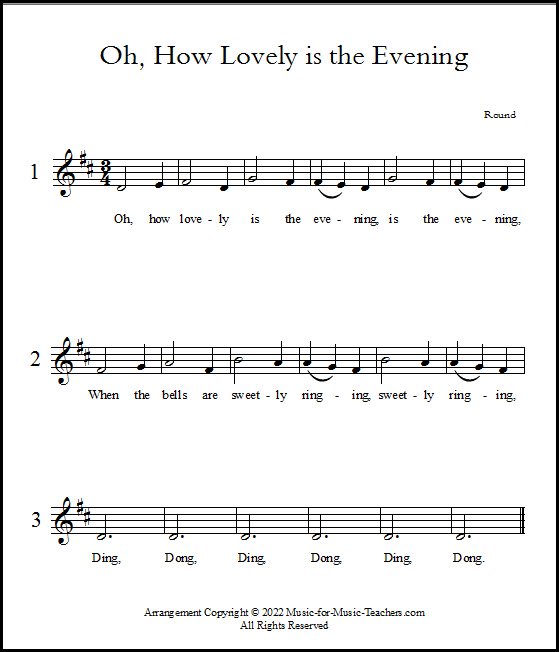
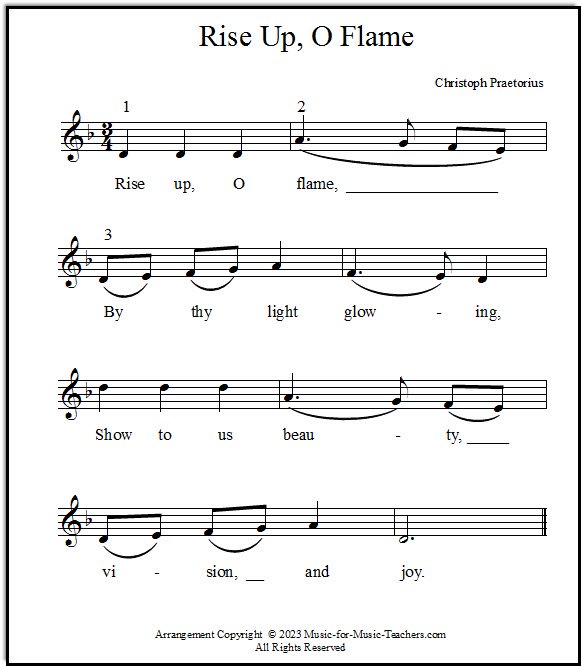
Another minor melody with a strong shape. A few repeated partial phrases contribute to the speed with which your students may learn this.
Oh, and it is pretty, too!
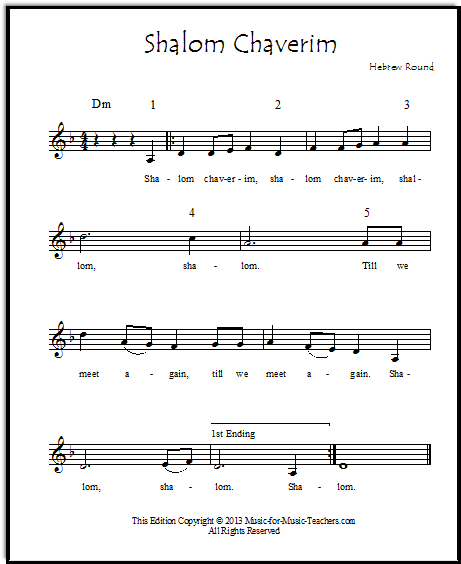
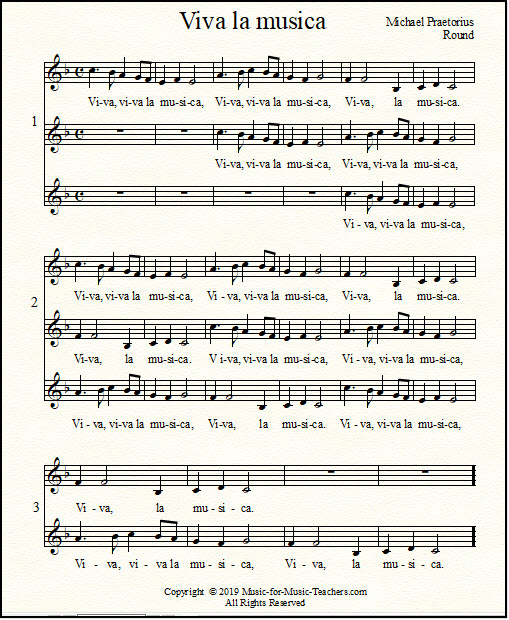
Viva la musica
Several arrangements here:
single-line melodies
3-stave versions
guitar tabs, and:
a lettered-notes version.
Very pretty!
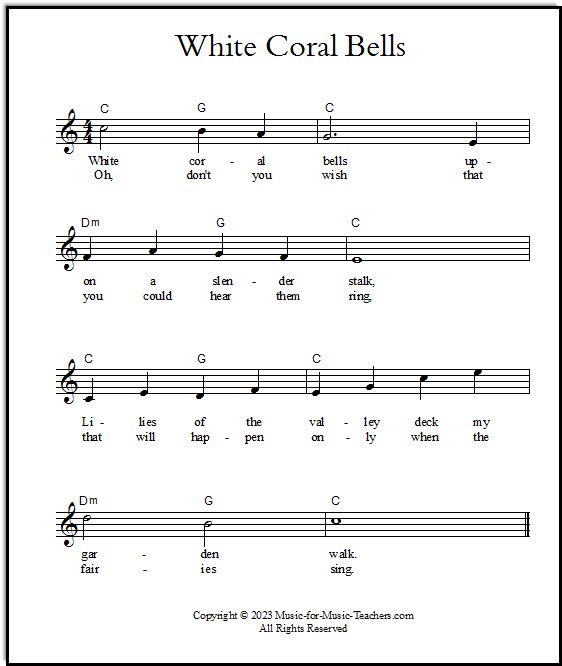
Duets and Ensembles
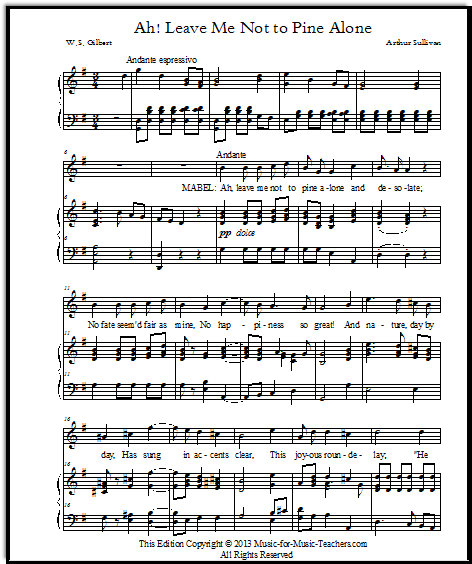
Ah, Leave Me Not to Pine Alone Gilbert and Sullivan duet
Frederick and Mabel sing this gorgeous duet from Gilbert and Sullivan's "The Pirates of Penzance".
The song begins dolefully (though beautifully), but ends with a bang!
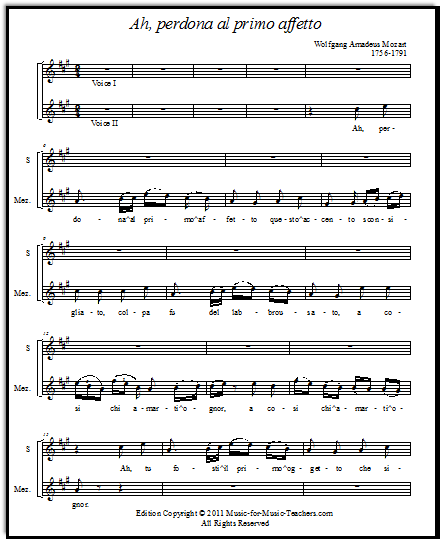
This duet is very lovely, as is all opera music by Mozart
Just the vocal parts.
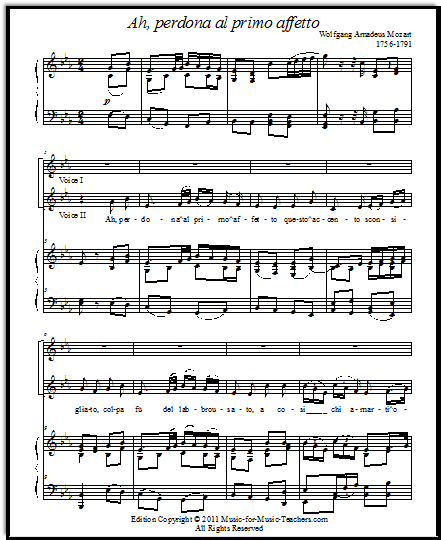
The full 7-page duet, from "La clemenza de Tito".
With the piano accompaniment.
Very beautiful!
This little harmonized version of Amazing Grace was written for piano, but works very well for voice, too!
One time, the bottom voice splits into two parts, and a couple of times, the bottom voice has to jump over the descending top voice, but you can work that out, or change the notes if you desire!
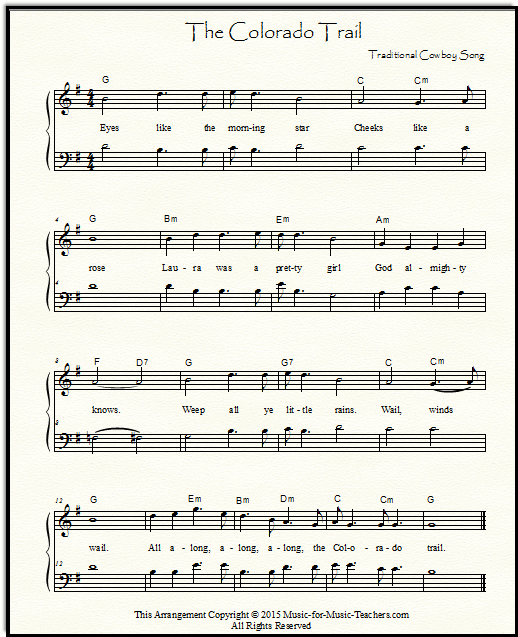
A duet version of this lovely cowboy song, for male or female voices, or both!
This is short - just one verse.
Esther, For Such a Time As This - the story of Queen Esther in the Bible
This 57-page song book includes the repeating chorus shown here, plus 38 verses in which the complete story of Queen Esther in the Bible is told.
It is a dramatic and riveting story, with the planned genocide of the Jewish people over 2,000 years ago!
This piece would work for youth theatre, Sunday school classes, a church program, a Purim performance, or a sing-along. LISTEN TO A VIDEO and see the music.
A very pretty Shape Note Hymn which talks about heaven, and how "it is better, farther on."
Very comforting lyrics, suitable for a funeral or memorial service for one who believes the message of the Bible, and has called Jesus their Saviour.
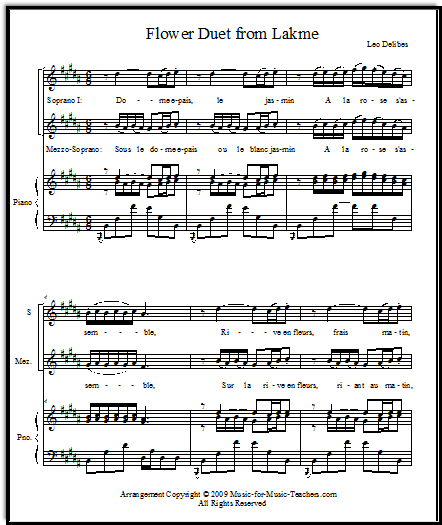
Flower Duet from "Lakme", abbreviated version
A young noblewoman of India shares her secret with her maid - love for an English officer- in what becomes a most lovely duet that sounds like birdsong.
Try this abbreviated version of the opera duet with a group of young girls - it will be one of the highlights of their early musical years.
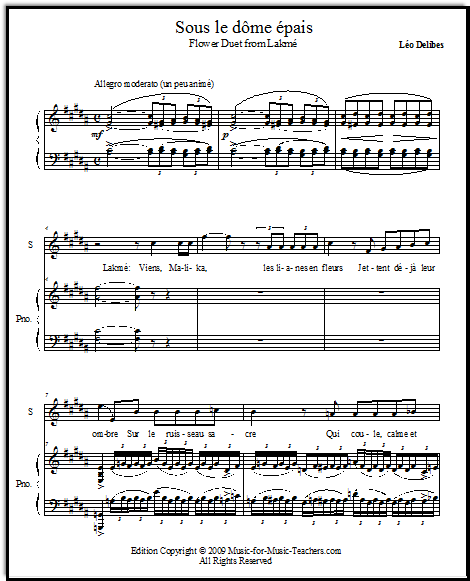
Flower Duet: the full 16-page Lakme Flower Duet sheet music
This is the full opera duet, offered in two keys!
One is the original key, and one is lowered a third, to make this melody accessible for high school girls.
Lovely enough for a wedding!
Gabriel's Message - "The Angel Gabriel"
A little-known song about the angel Gabriel's visit to Mary and her response:
"'To me, be as it pleaseth God,' she said."
Very lovely, and almost UNKNOWN.
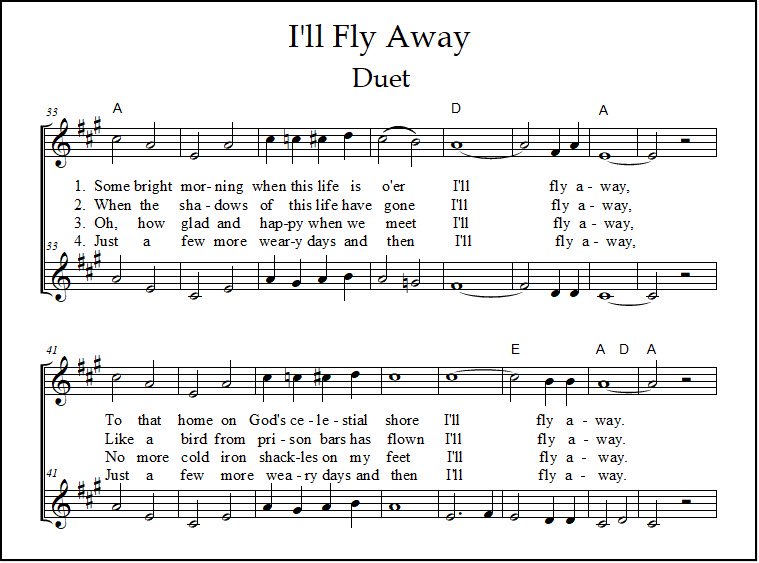
A lively gospel hymn about heading to heaven.
This pretty duet works well for voice or instruments.
Matchmaker, Matchmaker song interlude
From "Fiddler on the Roof" - this can be added to your students' recital performance of Matchmaker - a free download!
This music is original, written by me, not part of the copyrighted musical.
Therefore you can use it free of charge!
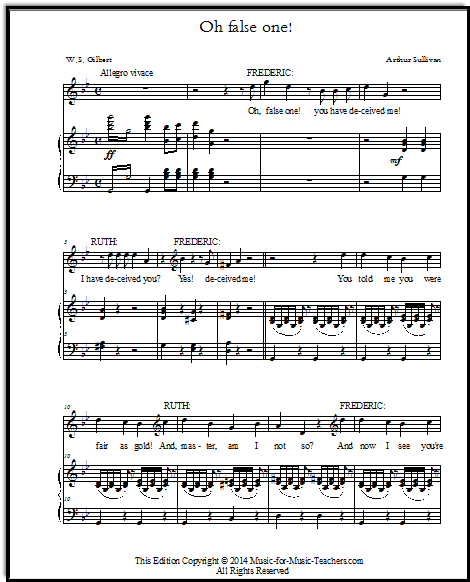
Lots of opportunity for dramatic play-acting with this song!
A duet between young Frederic and his nurse, who accidentally apprenticed him to a PIRATE instead of a PILOT.
A Gilbert and Sullivan operetta - which is to say, beautiful music with the craziest plot lines and lyrics!
What a pretty little song, with lots of energy!
VERY EASY - try this with your singers who have trouble singing harmony.
This duet works nicely with instruments as well.
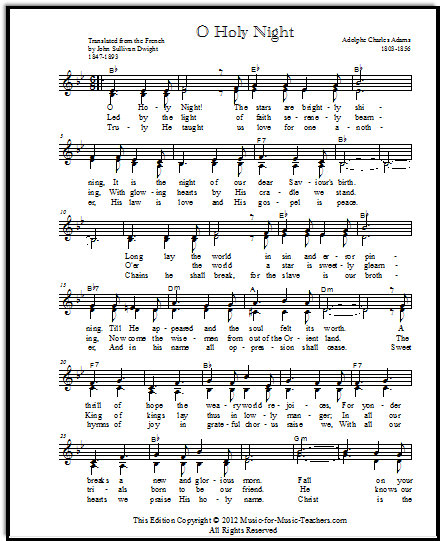
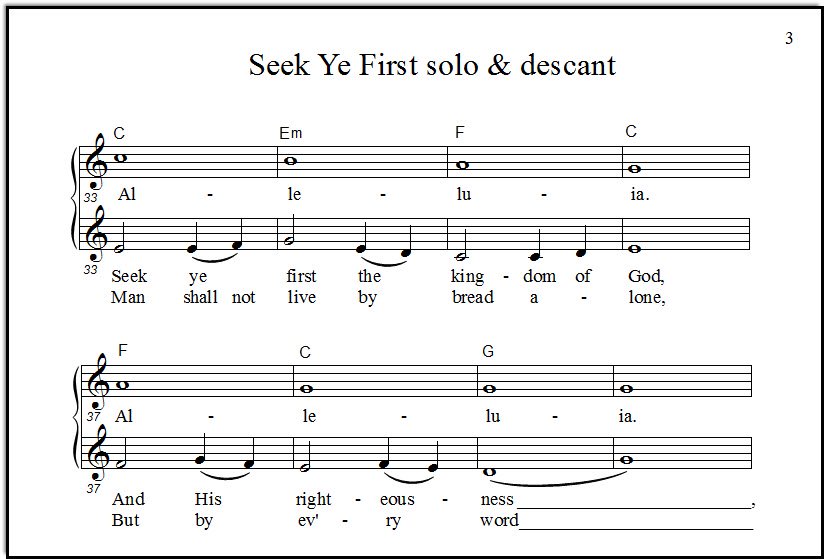
Seek Ye First lyrics & sheet music
This duet arrangement with the descant of Seek Ye First is easy, and very pretty.
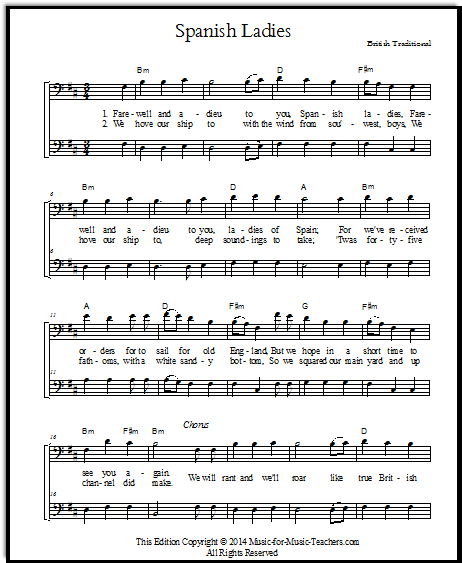
A sea chanty with a swing in it, from England.
A song that boys want to sing, too!
See it here set in the bass clef.
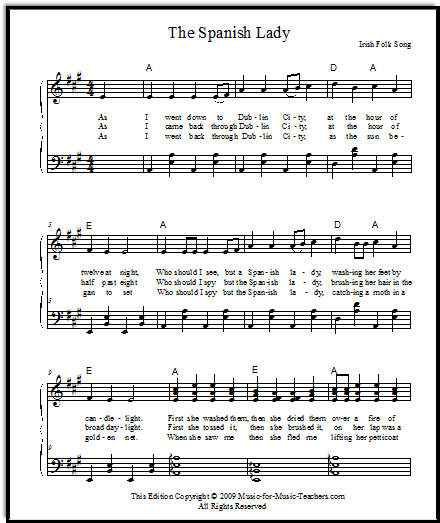
An Irish song with lots of energy. Very fun, with a pretty trio harmony that comes in at the chorus.
Not to be confused with Spanish LADIES, a sea chanty set in a minor key. This song, Spanish LADY, is exuberantly major!
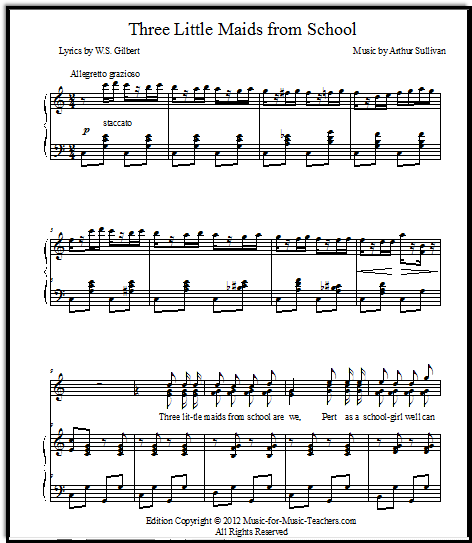
Three Little Maids From School
From "The Mikado" - a cute Gilbert & Sullivan trio with pretty harmonies and lots of movement
What Wondrous Love, Shapenote or Bluegrass style
This is lovey and haunting.
You probably don't know this melody! It has the sound of a shape-note song. Unusual and moving.
This is a German folk song made popular by Elvis, with new English lyrics. The harmony is very easy, and PRETTY!
You will probably recognize this sweet tune.
Broadway Music
Broadway Musicals List - go to THIS page
Lead Sheets
Go HERE to see all the lead sheets at Music-for-Music-Teachers, for vocalists and all instruments!
Vocal Exercises, Teaching Tips & Tools
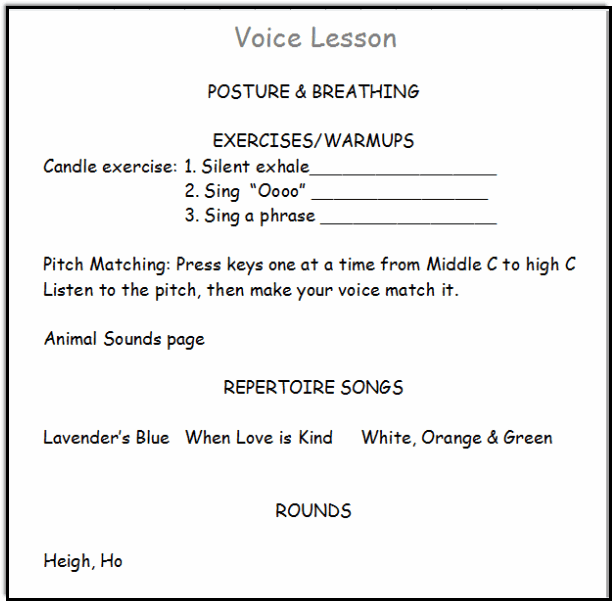
How to Teach Beginning Singers - If You are a Beginner, Too!
An outline to consider for your first voice lesson.
This one is perhaps a bit ambitious - but covers Warmups, Breathing, Pitch Matching, at least one Solo, and one Round.

Several pages of warm ups and vocalists to help train your singers to produce a good sound!
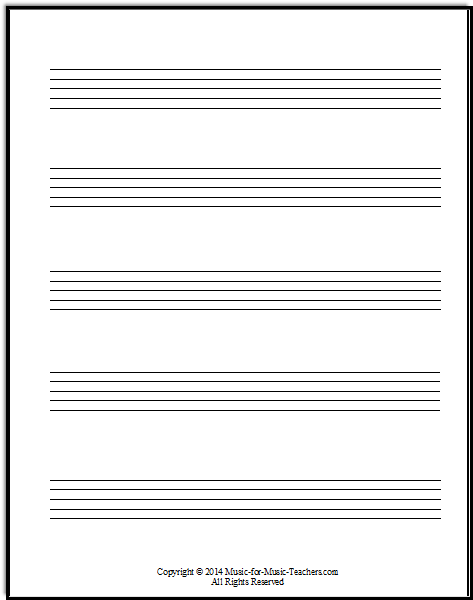
Staff Paper PDFs - all shapes & sizes!
Different pages with & without clefs, with & without bar lines, and with treble, bass, & viola clefs.

Teaching Singing To Elementary Students
Should young children receive voice lessons? What if they are singing already?
Suggested DO's & DON'Ts for a teacher of young voices.

Teaching Young Singers Who Don't Read Yet
What do you do with a little, cute, non-musician who can't even read their own language yet, much less music?
All the voice books mentioned above bear re-reading; they are almost like holding a conversation with a master vocal teacher.
And be sure to check out the many tiny (and frequently contradictory) vocal lessons offered all over Youtube; comparing them can be very instructive. Listen to opera singers.
In future pages, I will share more about starting voice students, and how they can be a very fun addition to your music studio.
Recitals are much more interesting when you can mix things up, alternating piano with voice, and maybe guitar.
Young girls, and lots of boys, just love to sing!
Voice lessons might be their dream, and you might be the answer to it!
If there is a shortage of voice teachers in your town,
- AND you have the piano skills to play musicals and classical music (or simplified versions),
- AND you have some singing background,
- AND you are willing to educate yourself in your weak areas, then you will be doing your community a wonderful service by taking on voice students. Avail yourself of the free vocal sheet music offered here, and you will be off to a head start.
People love to sing! If you can help them learn, you will make your community a more beautiful place to live.
Recent Articles


-
When He Cometh "Jewels" Hymn: Piano, Guitar, Vocal
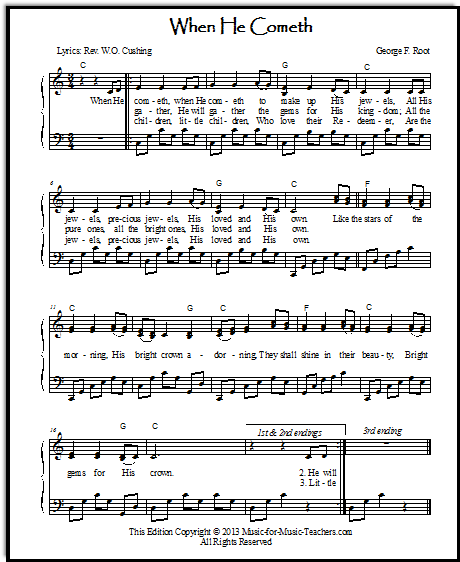 When He Cometh or "Jewels" is an old-timey sounding hymn. Very sweet & very simple, this is one your piano students & vocalists can learn from!
 -
Moonlight Sonata: How to Play This Piece Full of Black Keys & Triplets
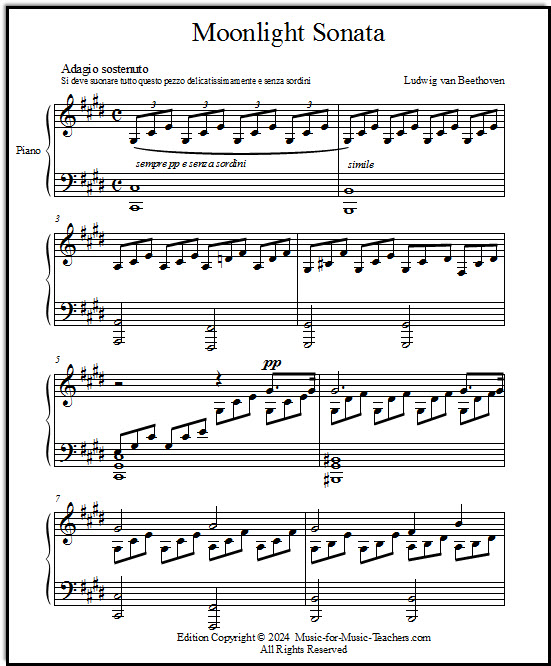 Moonlight Sonata: How to play this difficult piece full of black keys & triplets? Use large notes, lots of white space, & letters inside the note heads - easy!
 -
Bach Well-Known Pieces for Piano: the Musette in D, a Crowd-Pleaser!
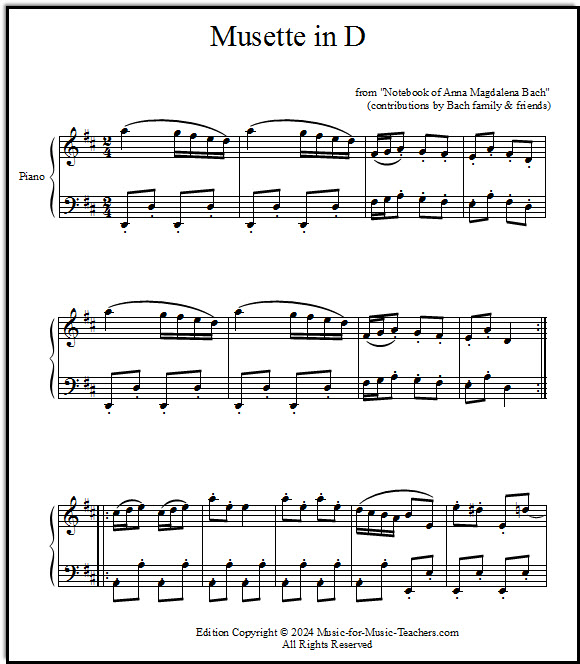 Some of the best Bach well known pieces include those from the "Notebook for Anna Magdalena Bach." Among piano pieces, "Musette" is perhaps the most joyous!
 -
Christ Arose Sheet Music: Resurrection Day Song for Piano or Guitar
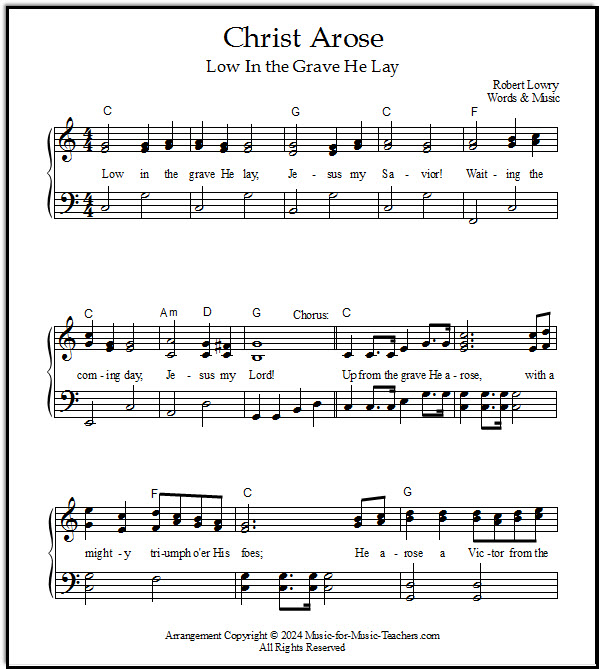 "Christ Arose" sheet music is perfect for Easter, or as many Bible believers say, "Resurrection Sunday." Mixing somberness & triumph, this song explains Easter.
 -
Sweet Hour of Prayer Hymn Sheet Music for Late Elementary Piano
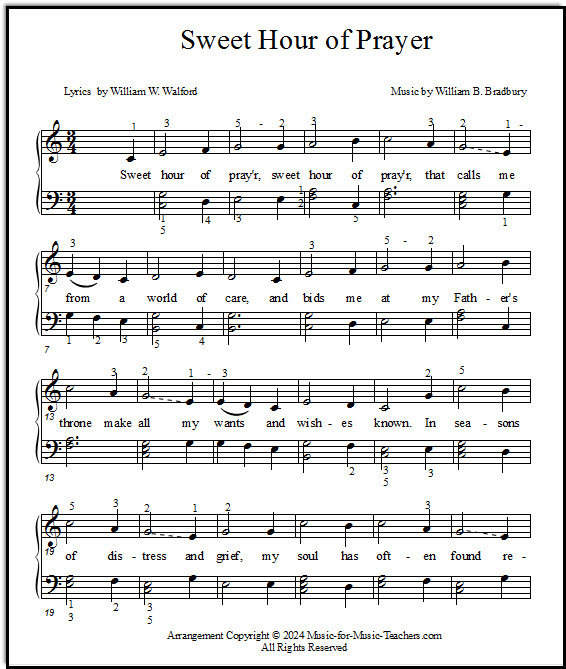 Sweet Hour of Prayer hymn music has been around a long time, and is greatly loved still. Check out 4 arrangements for beginning to elementary piano, & guitar!
Interested in songs from the Bible for your students or church? Check out my other website, SingTheBibleStory.com!
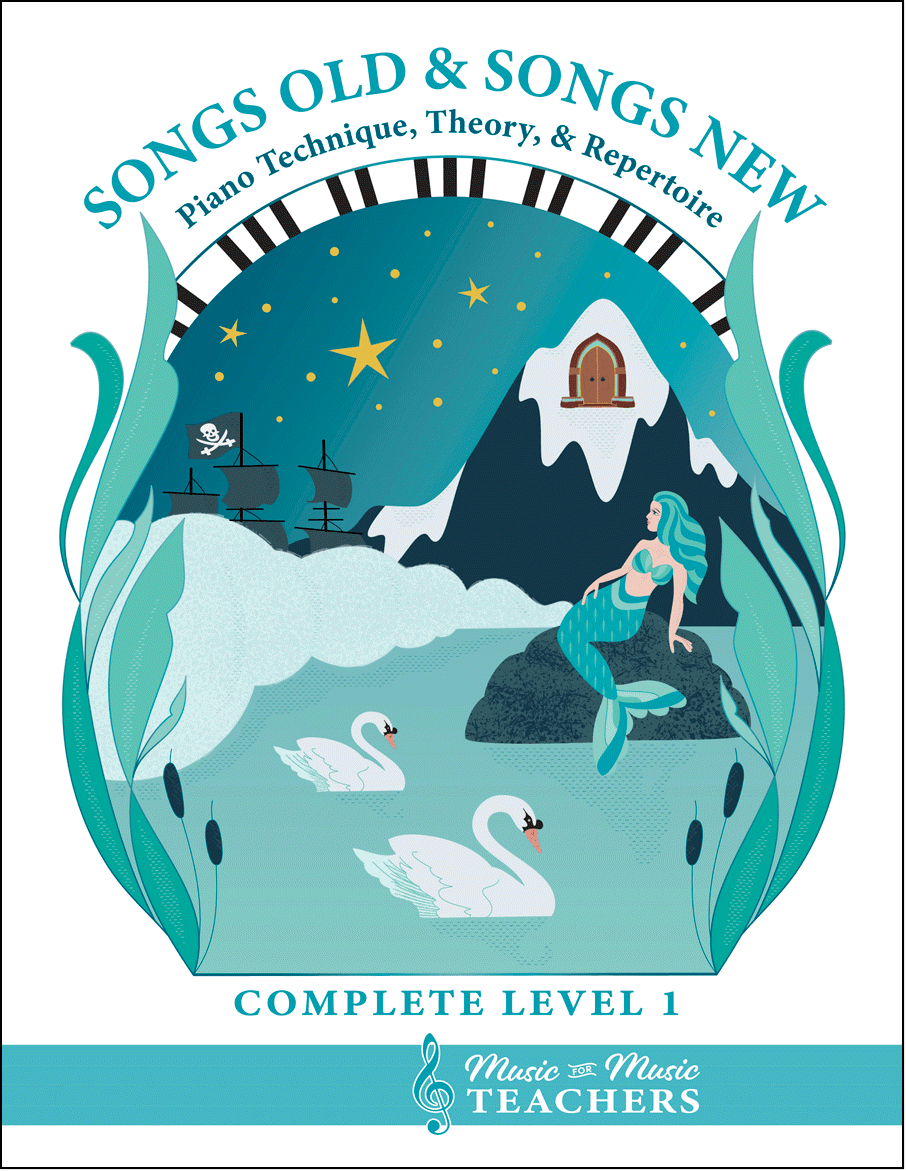
All the first-year material I give my beginner students.
Piano keyboard sheets, scales, chords, note-reading exercises, and over 256 pages of music!

This beautiful song book for piano & voice "Esther, For Such a Time as This", available as a digital download, tells the riveting story of the time when Jews in ancient Persia faced a foe named Haman, and how a brave young queen risked her life to save her people.
A good choice for a singing story-teller, an operatic group, a short theater production, or a class of children!
This book is also available from Amazon as a paperback.

This book is available as a digital download from this site. Visit this page to see some free examples from the book.
It is also available from Amazon as a paperback!
This is the perfect easy start for little pianists.
And when they start reading white-key notes on the staff, this is a fun easy resource to say each week, "Choose a new black-key song at home this week and figure it out to show me next lesson!" They will be spending more time at the piano.


%2C%20here%20in%20several%20keys%2C%20piano%20and%20voice.%20At%20Music-for-Music-Teachers.com)


%2C%20at%20Music-for-Music-Teachers.com)


.%20%20At%20Music-for-Music-Teachers.com)


A perfect read aloud storybook
for little boys or girls.
The Adventures of Tonsta highlight the travels of a very young boy with a good heart, who goes about helping folk in trouble.
With a red cap on his head and a sack of tools slung over his shoulder, Tonsta seems to meet people in distress wherever he goes.
Lots of trolls in this book - including one who gives him a Christmas gift!
Marianne:
You are awesome. Thank you. I'm a voice and piano teacher and to have so many pieces in one place- for many different levels- is a Godsend. Thank you for the time and effort you have put in to make this so easily available to all of us stressed music teachers!!!
Deb:
... I watched your video "Wondrous Love" with your eight gals - Magnificent! So refreshing to see good harmonies sung a capella these days; it seems to be rare!
Ruth:
Thanks, Dana, for your excellent customer service.
Amber:
Thank you! THANK YOU!!! For keeping the beautiful art of Opera alive! I stumbled upon this site and I'm so happy I did!
Louise:
I just wanted to say thank you so very much for your free printable sheet music. I am a piano teacher from the UK who has recently moved to a very remote location in Australia!
I found little to no decent music for my children to learn anywhere close by anyway and this website has been more than helpful as I've scoured around looking for resources. Just wanted to share my thanks! Blessings to you.
Sign up for "Take Note!" to see what's new every month.
Comments: Do you have a story or a question about music teaching? Share it!
Please note that all comments are moderated, and will not appear until I have approved them. Also, IF YOU ARE ASKING FOR MUSIC THAT IS NOT IN THE PUBLIC DOMAIN, YOUR REQUEST WILL BE IGNORED. That's pretty much any music written in the last 75 years...
What Other Visitors Have Said
Click below to see contributions from other visitors to this page...
I Won't Grow Up Peter Pan 
I am just saying it is the best Peter Pan song and it should be put on here!
Dana:
Hi, Tabitha, I like that song too. But perhaps you don't …
How Can I Teach My Daughter When I Can't Read Music Myself? Not rated yet
I'm very interested in taking lessons with my daughter, who is 4. I want her to learn to read music and practice pitch, tempo etc.
How can I teach …
Breathiness in My Students' Singing - How Can I Fix It? Not rated yet
I read some comments you had made about teaching voice lessons and some of it sounded very similar to my situation -- teaching piano, get asked about …
I Need Age-Appropriate Songs for My Young Daughter Not rated yet
Can you suggest a song book or some individual songs for an 8-9 year-old girl who is having singing lessons. In my opinion the songs she is singing with …
Teaching a 12-Year-Old Boy Singing Not rated yet
Hi,
First of all, I love your site -- it's been an amazing help to me since I started teaching.
However I've just started teaching a 12 yr old boy …
Do You Recommend Voice Lessons for a 6-year-old? Not rated yet
Question:
I have an almost six year old girl who loves to sing, dance and act, but we haven't done anything formal. She is definitely a girly girl. …
Ideas for Vocal Music for Young Groups? Not rated yet
I have been looking for a very, very long time for a website like this! WOW! I have been teaching for over 20 years and it's nice to have a resource …
About Some Hard-to-Find Songs... Not rated yet
Rose:
Dear Dana,
I am Miss Rose. I introduce your web site for all my students in Sri Lanka. They said that they enjoyed it well. Most of them …
About the Author

Hi, I'm Dana! (Say that like "Anna".) I'm the owner of Music-for-Music-Teachers.com, and a newer site, SingTheBibleStory.com.
Like some of you, I've been playing the piano since early childhood, and have added a few other instruments along the way, plus an interest in arranging and composing music.
You can find out more about me and the reason for this website at my About Me page.

Recent Articles
-
When He Cometh "Jewels" Hymn: Piano, Guitar, Vocal
When He Cometh or "Jewels" is an old-timey sounding hymn. Very sweet & very simple, this is one your piano students & vocalists can learn from! -
Moonlight Sonata: How to Play This Piece Full of Black Keys & Triplets
Moonlight Sonata: How to play this difficult piece full of black keys & triplets? Use large notes, lots of white space, & letters inside the note heads - easy!