Teaching Autistic Children
Ideas to and from Music Teachers
Teaching autistic children is easier if you have a plan.
Here is a general approach to piano lessons when working with autistic children, some practical procedures which can form a framework for the actual music teaching.
These ideas have mostly been gleaned from other teachers in forums in the past, but you need to be aware that understanding how to teach autistic children has gone through many stages, with lots of fumbling along the way...
Please do not accept what I say as gospel, as I am no expert. Your best bet for current knowledge is to search Facebook groups and other sites which specialize in the teaching of children with special needs.
Years ago I watched a very moving documentary called Autism: The Musical.
The stories were heart-wrenching. The mother of one of the boys (she is an acting coach, I think) made it her mission to produce a drama with these kids, pulling them together over many months, and getting them to work together...
Music was a very big part of it.
It was a good experience for these kids and their families and friends. No bullying, lots of encouragement.
My local library ordered the movie -- I recommend it to anyone who needs to bolster their empathy and patience. It may give you a feeling of hopefulness about what is possible.
Early in the movie, the statement is made that in 1980, autism was diagnosed in one child in 10,000. By the time the movie was made, it was one child in 150.
Today (2023) it is at least one in 35. But that figure is already dated.
TEACHING AUTISTIC CHILDREN:
SOME GENERAL GUIDELINES
Teach what you would teach other students, but more slowly and with greater amounts of review.
What does a music teacher teach?
TECHNIQUE
This means not just speed and strength of the fingers, but basic hand posture and how to sit at or with the instrument. For a singer, how to stand and breathe.
For these skills, you need a careful and knowledgeable teacher, for what beginners learn becomes habit (especially true for autistic learners). It is very hard to un-learn bad hand posture. But for students with autism, there may be a great deal more going on than just that issue.
Look at some of the videos and helpful explanations about technical problems autistic kids may have on Henny K's page "Piano Pedagogy Videos".

Most beginning music books have good photos or illustrations, but an experienced teacher is much more helpful than any book.
My preference with all students is to start on the black notes. There is a better chance for good hand posture than when starting entirely on the white notes.
Every lesson, the teacher will check posture and other fine points and make constant corrections, gently.
One long-time teacher of children with autism suggests, "Do not push posture or hand positions until you have found out if there are any weak muscle tone issues (both finger and core). You may be pushing a child to do what they simply can't at this time."
It may take a long time to make it through the beginning section of the method book, but it is important for all students to make finger numbers automatic.
It is not important to move fast!
THEORY
This means, for the most part, understanding the scales and chords, how to make them, and how they work together. For beginners, chords are the most important as far as actually using them in music.
Chords are very fun, and make piano music sound BIGGER. But teaching an autistic child, I'd stick with open 5ths for a long time.
Not all teachers are comfortable teaching chords to their students until chords show up in their piano method book, and it is too bad, because playing with chords is a wonderful way to learn new music without having to ALWAYS be reading notes.
Also, ease with chord-playing encourages experimentation, composition, and playing by ear!
Simple songs such as Mary Had a Little Lamb can be dressed up, if the left-hand/right hand coordination is there.
Chord-playing also makes it easy to turn simple melodies into duets. (For examples, see some of my Beginner Piano song arrangements such as Yankee Doodle, Star of the County Down, and All the Pretty Little Horses.)
When teaching autistic children and young beginners, I would not venture past pentascales (5-note scales) for a very long time, not until the music they are playing seems to call for full scales.
It is my opinion that every new concept must be justified by its usefulness right NOW (or in the coming weeks), especially with students who move slowly and require much review.
NOTE-READING
This is where the Method or Lesson Book comes in. There are so many methods, but one I am currently very excited about is The Perfect Start for Note-reading.
A new series by Kevin and Julia Olson, it features very short tunes with optional teacher duet parts, and much repetition of notes.
It moves s-lo-w-l-y. I even hand these books to my older beginners for an occasional change of pace in sight-reading. Many of the pictures and song lyrics are fun - goofy, but not too childish.
Whichever method you decide upon, it should take a gradual approach to note-reading, but do not depend upon this book alone!
Flashcards, games, drawing notes on a chalkboard, whiteboard, or paper... these are tools you will find useful.
Little by little, with many different means of reinforcement, note-reading can be conquered.
I like the idea offered by one teacher working with autistic children: when the end of Lesson Book 1 (or the Primer) has been reached, start at the beginning of Book 1 (or Primer) of a different method! Why not? Review is the greatest thing for really learning WELL.
It's good to keep seeking fresh ideas and teaching tips for autistic children. Ideas that can be turned into simple games are a good way to keep things fun.
Henny K, below, works with non-verbal students.
Among many other videos on her page "Piano Pedagogy Videos" - that is, "How to teach piano videos" - is this one of a bored student:
REPERTOIRE
This is what your autistic student is really going to work at -- songs or musical pieces he likes a lot.
These pieces may not ever be perfect, but he or she should keep this music "fresh," not forgetting how to play it. Having a collection of songs that are ready to play makes kids feel good about their increasing ability.
My students choose a beautiful color of 8 1/2" by 11" card stock paper to be their "Repertoire" sheet.
Every time they learn a decent-sounding bit of music well enough for it to be considered potential recital music, we write it down on the Repertoire sheet.
Only rarely does this music come from the Lesson Book, alas!
Occasionally, it is music learned by rote, such as the chord pattern from The Pink Panther, or the 12-bar-blues. This music I TRY to have them play frequently, but often I forget about it too!
Please visit my other pages with more information about teaching children with autism, and finding a teacher for your child:
My Child Has Autism: How Can I Find a Music Teacher?
AutismOneMedia YouTube channel - a source of medical, legal, and political education
Autism & Interactive Toys, by Helen Nichols
Dianna:
Your website is a light in the darkness. THANK YOU for all you do in helping to spread the love of music. It matters!
Recent Articles


-
Thank you so much for the rounds!
Hi Dana, I am just writing to thank you for the free rounds for singing -- I have put up my hand to lead folk songs and hymns for my Christian homeschool -
Teacher
 I stumbled upon this site by accident, and am very glad I did. As a bumbling untrained music teacher, I like your hints about how to teach - although I
 -
Auld Lang Syne Sheet Music PDFs: for All Instruments & Singers!
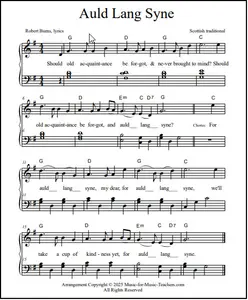 Auld Lang Syne sheet music for New Year's Eve & other gatherings! Piano arrangements, guitar tabs, & lead sheets with chords in many keys, for all singers.
 -
Favorite Christmas Songs: Duet Vocal Sheet Music
 The best duet Christmas songs are those ones you knew & loved as a child! This set of 14 "a capella" carols arranged for 2 voices is just right for caroling!
 -
"Walking In the Air" Piano Music from The Snowman
 This sparkling piano arrangement of the main musical theme from The Snowman will win your students' hearts and imaginations, too, with its soaring beauty!
Interested in songs from the Bible for your students or church? Check out my other website, SingTheBibleStory.com!
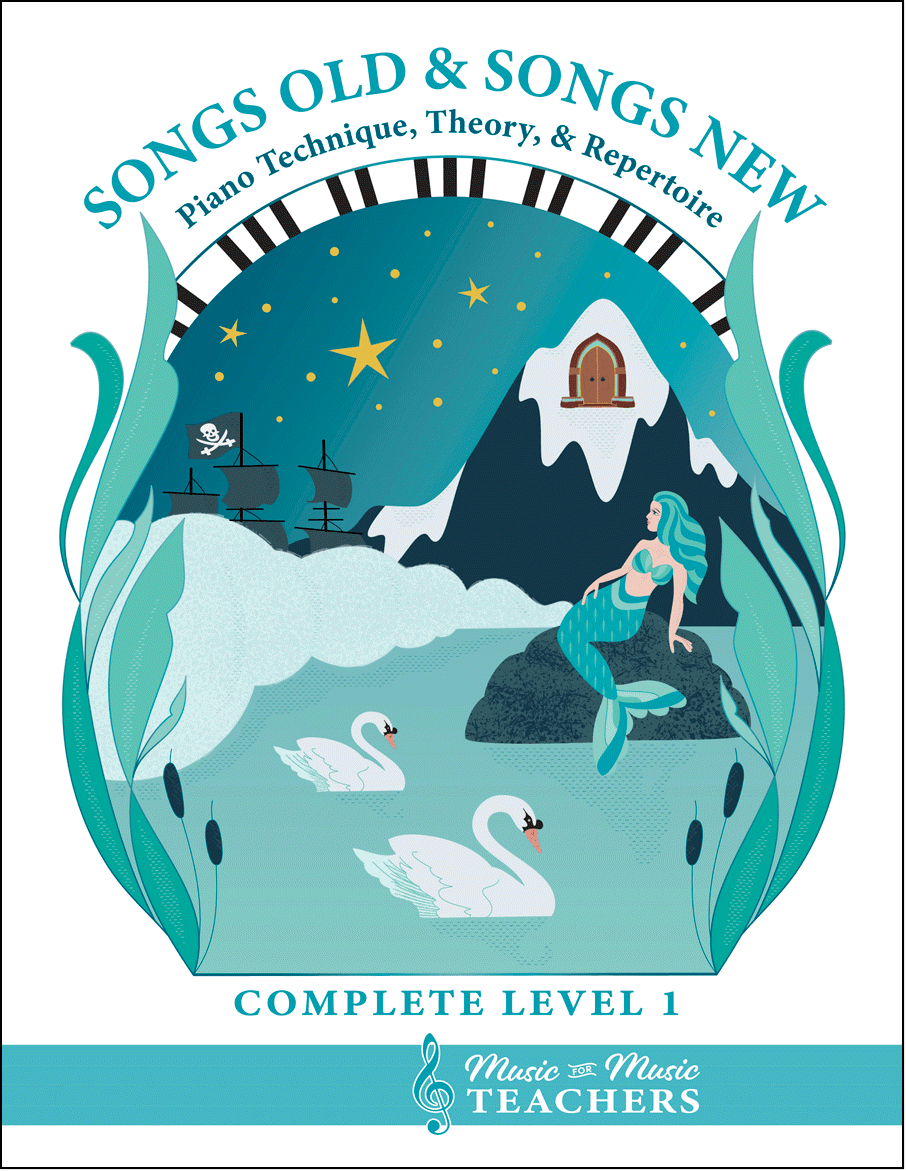
All the first-year material I give my beginner students.
Piano keyboard sheets, scales, chords, note-reading exercises, and over 256 pages of music!
Music-for-Music-Teachers.com is a participant in the Amazon Services LLC Associates Program. As an Amazon Associate I earn from qualifying purchases.
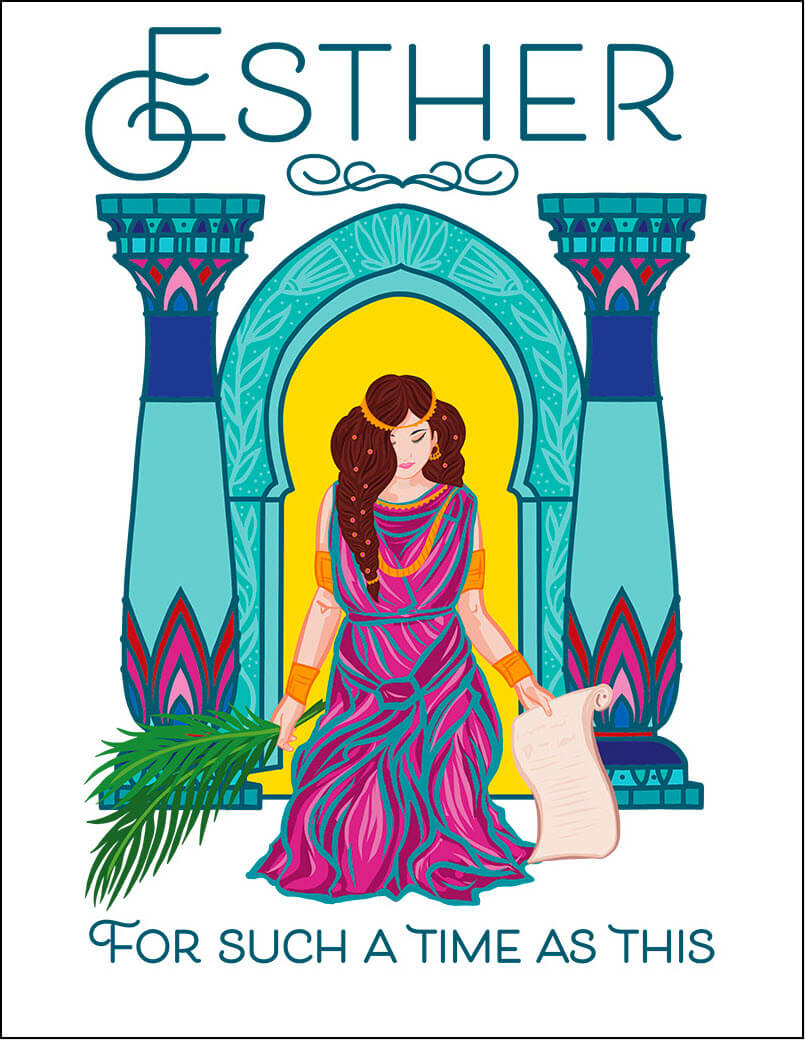
This beautiful song book for piano & voice "Esther, For Such a Time as This", available as a digital download, tells the riveting story of the time when Jews in ancient Persia faced a foe named Haman, and how a brave young queen risked her life to save her people.
A good choice for a singing story-teller, an operatic group, a short theater production, or a class of children!
This book is also available from Amazon as a paperback.
Music-for-Music-Teachers.com is a participant in the Amazon Services LLC Associates Program. As an Amazon Associate I earn from qualifying purchases.
This book is available as a digital download from this site. Visit this page to see some free examples from the book.
It is also available from Amazon as a paperback!
This is the perfect easy start for little pianists.
And when they start reading white-key notes on the staff, this is a fun easy resource to say each week, "Choose a new black-key song at home this week and figure it out to show me next lesson!" They will be spending more time at the piano.
Music-for-Music-Teachers.com is a participant in the Amazon Services LLC Associates Program. As an Amazon Associate I earn from qualifying purchases.


A perfect read aloud storybook
for little boys or girls.
The Adventures of Tonsta highlight the travels of a very young boy with a good heart, who goes about helping folk in trouble.
With a red cap on his head and a sack of tools slung over his shoulder, Tonsta seems to meet people in distress wherever he goes.
Lots of trolls in this book - including one who gives him a Christmas gift!
Music-for-Music-Teachers.com is a participant in the Amazon Services LLC Associates Program. As an Amazon Associate I earn from qualifying purchases.
Comments
Have you got experiences, insights, knowledge or just plain frustrations to share with others who teach music to these special kids? Perhaps you have books, articles, or websites to recommend, techniques you've found helpful, or a success story! Every additional bit of information is helpful to those seeking for solutions...
What Other Visitors Have Said
Click below to see stories or questions from other visitors to this page...
I have recently begun teaching an 8-year-old girl with mild autism to play the piano. 
She has had 4 lessons so far. At the first lesson, she showed me that she could press down on the keys, but only with the 2nd finger of her right hand. …
Let's Chat!
I've been working with students with autism for over 10 years now and have been teaching piano for about 12 years.
If anyone would like some input …
I Haven't Been Successful Finding a Teacher for My Daughter
I live in the north suburb of Chicago. For the past two years I have been trying to get a good teacher to teach my daughter playing piano, with little …
What About Teaching Piano to Autistic Adults?
Hi! I found your site by searching "teaching piano to autistic adults."
Your site seems to have the most information on teaching autistic children, …
Think Outside the Box
My son has low cognitive level, in addition to being autistic. He does not understand numbers, letters, "which finger", left, right, etc. However, he has …
Child with Aspberger's Has Lost Her Ability to Play Piano
My best friend's daughter has taken piano lessons for over a year. She loved playing and was pretty good. The last time I heard her play I was impressed …
How my Nursing Degree Helps to Teach a Boy with Autism Not rated yet
I have been teaching a young boy who is autistic and blind for a few years now. He comes every week assisted with a woman from the autistic society versed …
About the Author
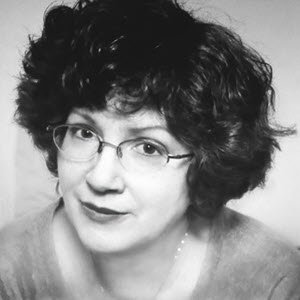
Hi, I'm Dana! (Say that like "Anna".) I'm the owner of Music-for-Music-Teachers.com, and a newer site, SingTheBibleStory.com.
Like some of you, I've been playing the piano since early childhood, and have added a few other instruments along the way, plus an interest in arranging and composing music.
You can find out more about me and the reason for this website at my About Me page.

Recent Articles
-
Thank you so much for the rounds!
Hi Dana, I am just writing to thank you for the free rounds for singing -- I have put up my hand to lead folk songs and hymns for my Christian homeschool -
Teacher
I stumbled upon this site by accident, and am very glad I did. As a bumbling untrained music teacher, I like your hints about how to teach - although I